ROTHERHITHE VILLAGE and SURREY QUAYS


The RECTORY

South of the riverside village
Albion Street
Former THE LITTLE CROWN P.H.

THE FINNISH SEAMEN’S CHURCH. Shop & café


Cultural centre, sauna, café, shop
ST.OLAV’S NORWEGIAN SEAMEN’S MISSION and CHURCH
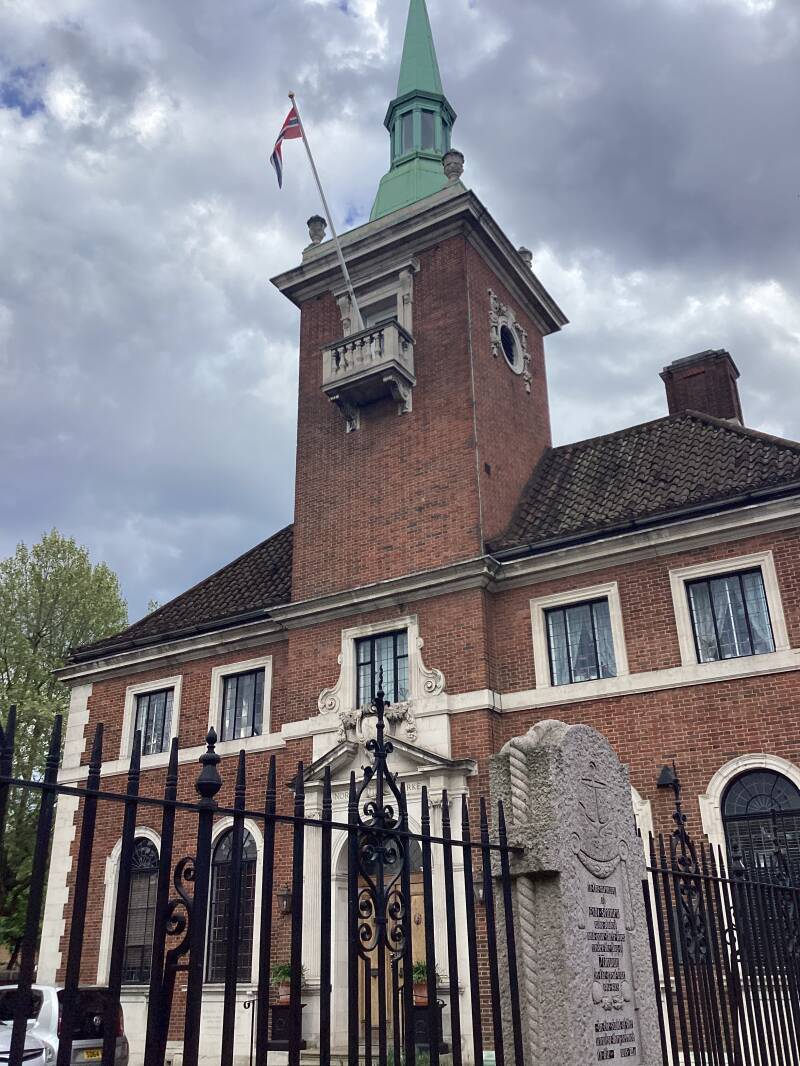


Cultural centre for Norwegians in the UK and IRELAND.
St.Olave’s Square has been regenerated thanks to a community-led initiative
The Norwegian Church of St Olav’s acted as a key centre for Norwegian resistance, spiritual life, and government-in-exile activities during World War II.
After Germany invaded Norway in April 1940, St Olav’s became the place of worship for King Haakon VII and the Norwegian Government in exile. It served as a vital social and spiritual gathering place for Norwegian sailors, soldiers, and supporters of the resistance movement, often called the "Norwegian church in London" and considered a safe haven.
THE ROTHERHITHE RIDER artwork
The work of sculptor Heather Burrell, who created it to mark the time the Tour de France began in London, in 2007. The same artist created the Blue Iridescence sculpture in nearby Deptford Park
Lower Road
ELIZABETH DARE
ALBIN MEMORIAL GARDEN.
Place for interment of ashes caskets
ALBIN FUNERAL DIRECTORS
Former ST.OLAVE’s workhouse buildings , then hospital. Now the site is residential
MICHAEL CAINE was born here

Born Maurice Joseph Micklewhite in St Olave's Hospital, Rotherhithe. His career started in repertory theatre and television, eventually getting his big break in the film 'Zulu'. He went on to star in many more films including 'The Ipcress File', 'Alfie' and 'The Italian Job'. Famous for the catch phrase 'Not a lot of people know that', which he never actually said. (It was supposedly coined by Peter Sellars in an impersonation of him). Knighted in 2000.
Before he was 10 the family were moved from war-torn Bermondsey to Walworth, first in Urlwin Street and then Marshall Gardens. The later home was a post-war pre-fab at Elephant and Castle but has been demolished and even the street no longer exists. He went to John Ruskin School then Hackney Downs Grocer’s School and then after a year, Wilson’s Grammar School.
Centre for WW2 RESISTANCE.
METROPOLITAN DRINKING FOUNTAIN and CATTLE THROUGH
HELEN PEELE COTTAGES (ALMSHOUSES)

“These almshouses were erected under the will of the late Charles John Peele, partner in the firm of Brandram Bros. and Co. of this parish. Also of Childown Hall, Chertsey, Surrey.
To the memory of his mother, Helen Peele A.D 1901. ”
Seven Islands?
KING GEORGE’s FIELD
King George’s Field is a memorial to King George V (1865 – 1936) in the heart of the Docklands, and one of only two such sites in Southwark.
The park grew in three stages. In 1938, Bermondsey Borough Council used a grant of £500 from the King George’s Fields Foundation to convert a piece of land close to All Saints Church into a simple, hard-surfaced recreation area for children. This was a small but popular addition to the church’s existing public garden, which had seats and formal bedding set around pathways in a pleasing oval shape.
Former SURREY QUAYS DOCK OFFICE
On the entrance road into the Docks from Lower Road. The clock tower now marks the entrance to the shopping centre from Surrey Quays Road. They were designed by engineer James McConnochie and are some of the few surviving buildings of the Surrey Commercial Docks. They were built in 1887, and it continued in use until the closure of the docks in 1969. There are three linked parts the Superintendent's Office with clock tower and the Janitor's House, both now known as the Dock Manager's Office and a large open plan General Office which is now 1-14 Dock Offices. They were restored by the London Docklands Development Corporation for use as offices. There is a blue plaque to the fire storm bombing of 1940 on the first night of the blitz.
EDWARD MUTEESA, EXILED UGANDAN PRESIDENT, died here
Gomm Road
RICHARD CARR-GOMM

Diversion to SURREY QUAYS and ROTHERHITHE PENINSULA (scroll down)
Former PRINCE OF ORANGE P.H.
Former SWEDISH SAILORS MISSION
Former THE CHINA HALL PH
ADA BROWN SALTER lived here (WOMEN’s HOUSE, of the BERMONDSEY SETTLEMENT


Surrey Quays LO station
The station was built by the East London Railway Company and opened on 7 December 1869; it was originally known as Deptford Road.[4] On 17 July 1911 it was renamed Surrey Docks[4] in reference to the nearby Surrey Commercial Docks(which closed in the 1960s), and further renamed Surrey Quays on 24 October 1989,[4] following the construction of the nearby Surrey Quays Shopping Centre. By then it was serving the EAST LONDON LINE of the LU, a line now swallowed by the LO.
A JD WETHERSPOON P.H.
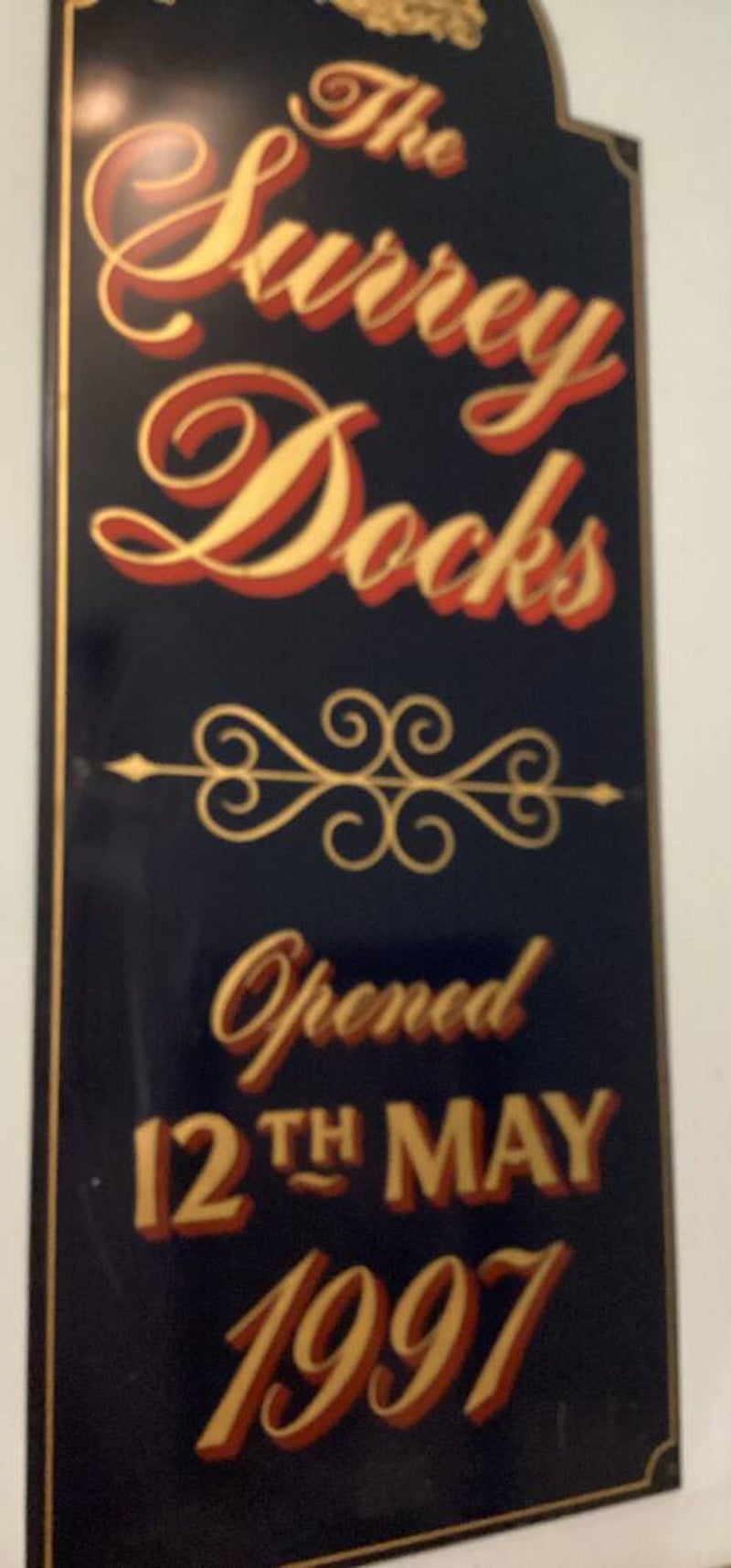
DOCKERS SHELTER (reproduction)
Bridge
Lower Road
Shops and eateries
GREENLAND DOCK
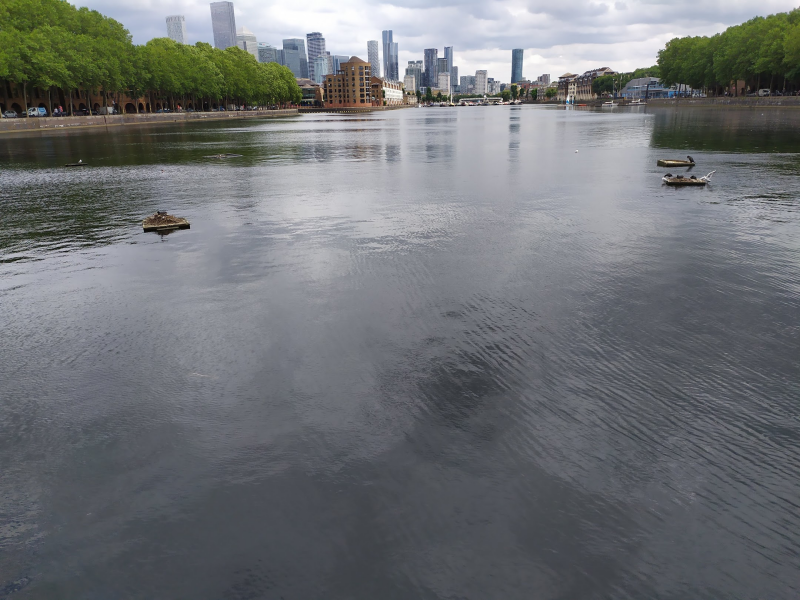

Route to SURREY QUAYS
DOCKMASTER’S OFFICE. CLOCK TOWER


Beneath the London Docklands Development Corporation logo: “Dockmanager's Office. Former Surrey Commercial Docks Superintendents' Office built in 1887 and restored to its original condition by LDDC in 1985.
You are entering the former SURREY COMMERCIAL DOCKS, now (part of them) the SURREY QUAYS


Cited by LONDON REMEMBERS "The first bomb of the London blitz landed on the Dockyard Offices on the periphery of what is now the car park for Surrey Quays shopping centre at Canada Water.”
Citing PORT CITIES: “ "... a firestorm in the docks that blazed from end to end for a whole week. ... A third of the warehouses and transit sheds were destroyed. The inferno at the docks eventually spread to cover 100 hectares (250 acres). Firemen from London and as far away as Bristol fought more than 40 separate fires. The largest fire at the Surrey Docks required 300 pumps to contain it."
SURREY COMMERCIAL DOCKS

By the mid-18th century the old HOWLAND DOCK, then GREENLAND DOCK had become a base for Arctic whalers and was renamed Greenland Dock. However, by the 19th century an influx of commercial traffic from Scandinavia and the Baltic (principally timber) and Canada (foodstuffs for London's population) led to IT being greatly expanded and other docks being dug to accommodate the increasing number of vessels. Eventually, 85% of the peninsula, an area of 460 acres (1.9 km²), was covered by a system of nine docks, six timber ponds and a canal. Several of the docks were named after the origins of their customers' cargos, hence Canada Dock, Quebec Pond, Norway Dock and Russia Dock.
CANADA WATER…only a third

The lake is named after the former Canada Dock, of which Canada Water is the surviving northern third, and which was mainly used by ships from Canada. As with much of the Docklands, the Surrey Commercial Docks closed in the 1970s. During the 1980s, the London Docklands Development Corporationtook over, and invested heavily in the redevelopment of the area. About half of Canada Dock was infilled and the Shopping Centre built on top of it; the remainder was converted into the present lake and wildlife refuge. An ornamental canal, Albion Channel, was created (through the site of the now filled-in Albion Dock) linking Canada Water to Surrey Water, with the spoil used to create Stave Hill in nearby Russia Dock Woodland.
A new district is emerging…

Railway ventilation shaft
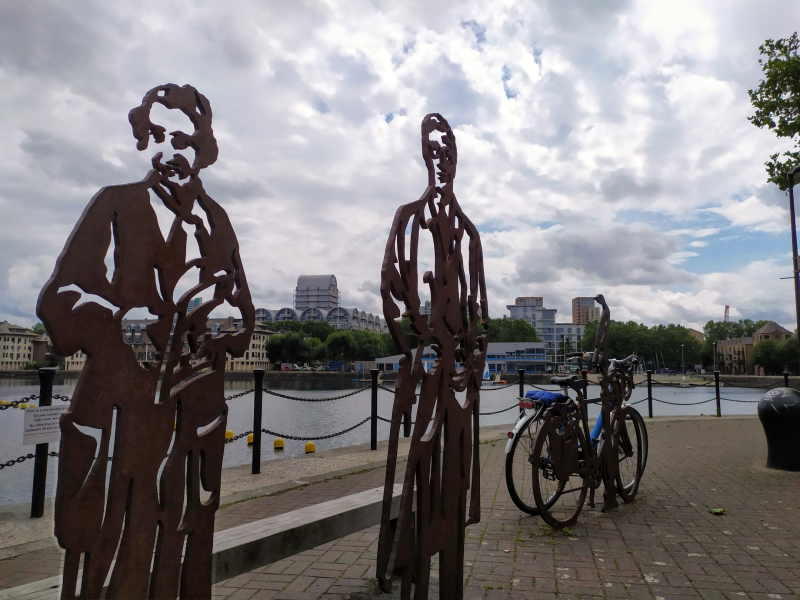
DEAL PORTERS artwork


Deal porters, rafters, markers
PUBLIC LIBRARY, CAFÉ & THEATRE


with an inverted pyramid shape; it contains a café, performance space, internet points and popular books. It is clad in aluminium sheets, anodised a light bronze with sequined perforations. The south-eastern corner has a 150-seat auditorium, to be managed by the Deptford-based Albany community theatre.
On the top floor historic photos and history notes about the area
Convenience shops and eateries. Street food market
Canada Water LU (Jubilee Line)an LO (Windrush Line) stations, and bus station

From here…
To Surrey Water and Thames Path
To Russia Dock Woodland and Thames Path (along Nelson Walk or Lady Dock Path)

Towards the shopping centre and Grenland Dock
Corner Corner

The street food specialist Kerb and music curator the Broadwick Group will launch a new concept next week, bringing together restaurant brands, live jazz and a focus on sustainable farming to a former waterside retail unit.
A farm?. As well…
Sustainability will be a huge focus too, with Harvest London installing the city’s biggest commercial indoor vertical farm in the space. As well as providing fresh produce for the Corner Corner food hall and all-day cafe, the farm will supply other London restaurants in an effort to build a hyper-local food system and host interactive experiences for locals.
Surrey Quays Shopping Centre & street food outside
Bascule bridge, not anymore in use
DOCKERS CALL-ON SHELTER (reproduction)
Where available dockers gathered to be chosen to work. Physical fights were common, and Ben Tillett – one of the leaders of the Great Dock Strike – wrote that men could lose ears, or be crushed to death, in the frantic struggle to catch a foreman’s eye. For the Surrey Commercial Docks, the call-on happened daily on Redriff Road near Lower Road, come rain or shine.


Evelyn Road to Deptford and Greenwich