GREENWICH TOWN CENTRE

In this chapter: Greenwich town centre main sights along the Thames, from CUTTY SARK to THE CUTTY SARK pub, including the TRAFALGAR TAVERN, the buildings and features of the OLD ROYAL NAVAL COLLEGE, the MARKET, ST ALFEGE’s Church

GREENWICH TOWN CENTRE around 1700> https://www.ghsoc.co.uk/wp-content/uploads/2021/11/Early-Town-Planning-in-Greenwich-2-Alec-Holden-1.pdf

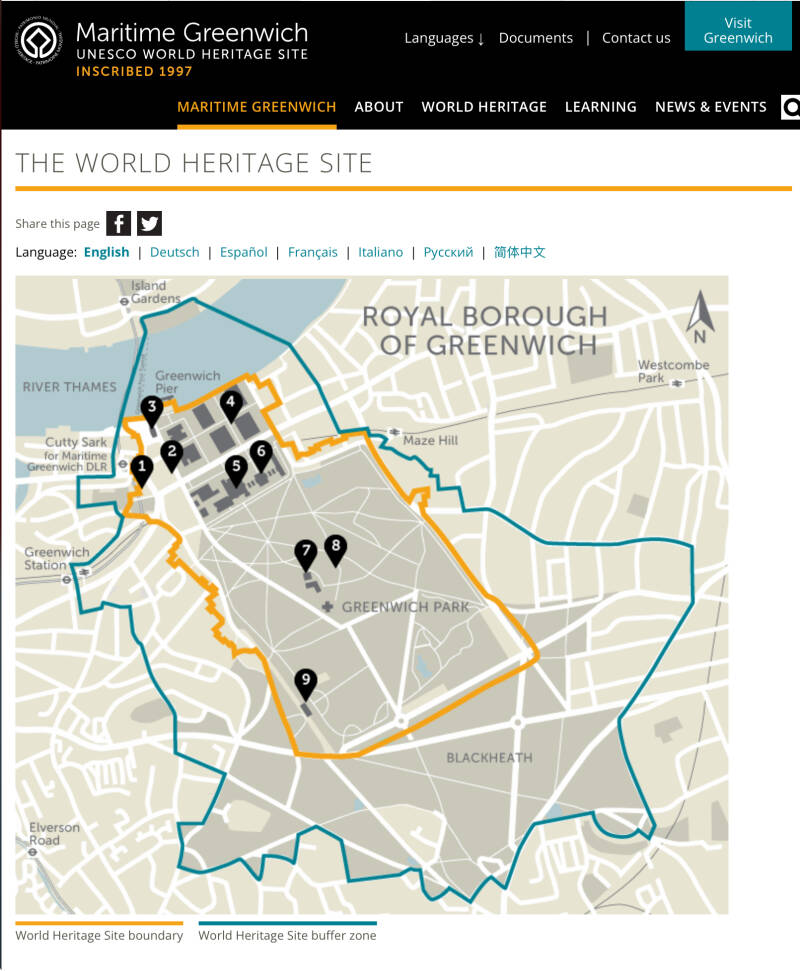
*Greenwich. Town and Royal borough
You are 5.5 miles or 8.9 km from CHARING CROSS.
Population: 30.600. The Borough (18.28 sq.miles): 269.000 (62% white, 17% Black, 12% Asian). First British African Mayor (2016). Labour Majority.
COAT OF ARMS: TUDOR ROSE, ANCHOR, SEA. JUPITER and NEPTUNE.ASTROLABE and TRIDENT. CROWNS of ARMY and NAVY. River THAMES (a rare concession by GARTER KING OF ARMS), STARS, HOURGLASS, CANNON.
“We Govern by Serving”
Internationallly recognisable Associations
OBSERVATORY. MERIDIAN. MEAN TIME
RIVERSIDE route from Cutty Sark

The riverside route that coincides exactly with the Thames Path (see chapter on THAMES PATH 4, SE LONDON -1-)
BILLINGSGATE ROAD and BILLINGSGATE DOCK. BILLINGSGATE?
There are some early medieval associations with Billingsgate in the City of London. This was the main dock in medieval Greenwich and important to the large Greenwich fishing fleet. It is first noted in 1449. It was enlarged in 1850. It is the traditional landing place for the Greenwich Ferry from the Isle of Dogs and it has been suggested that this was the destination of Watling Street. Greenwich ‘peter boats’ fished in the river and larger vessels went to the North Sea. The fleet moved to Hull and Grimsby in the 1850s when rail transport became available.
This road ran from Greenwich Churchyard to Billingsgate Dock on the riverside. It was cleared before 1950 and is now under Cutty Sark Gardens.
Site of a lighterage company, barge breaker and repairer, forage contractor…
Entrance to the FOOT TUNNEL

Diversion towards the ISLE OF DOGS (ISLAND GARDENS) and the EAST END. See www.visit-londons-east-end.co.uk
Northernmost stretch of the TUNNEL: postwar repair
Equally you can divert to ISLAND GARDENS, and other stations N of the river on

Once on the ISLE OF DOGS


Shops, eateries, street food around
What happened to the GIPSY MOTH IV?
Gipsy Moth IV is a 53 ft (16 m) ketchthat Sir Francis Chichester commissioned e specifically to race around the globe single-handed laacing against the times set by the clipper ships of the 19th century.
In July 1968, Gipsy Moth IV was put on permanent display at Greenwich in a land-locked purpose-built dry dock next to the Cutty Sark. The yacht was open to the public for many years. In September 1977 a ceremony was held to mark her 1 millionth visitor on board. Eventually, due to general deterioration from allowing visitors to walk across her decks, Gipsy Moth was permanently closed to visitors, remaining on display at Greenwich next to the Cutty Sark. Her “entombment” at Greenwich was referred to in the song "Single Handed Sailor" by the band Dire Straits. Chichester died at the age of 71 on 26 August 1972.
Gipsy Moth IV was the first ever purpose-built ocean racer and has over the years become the most famous of small sailing vessels. Gipsy Moth IV's voyage was the inspiration for the Golden Globe Race (GGR) which continues today.
The name, the fourth boat in Chichester's series, all named Gipsy Moth, originated from the de Havilland Gipsy Moth aircraft in which Chichester completed pioneering work in aerial navigation techniques.
Bombing site: THE SHIP HOTEL
CUTTY SARK
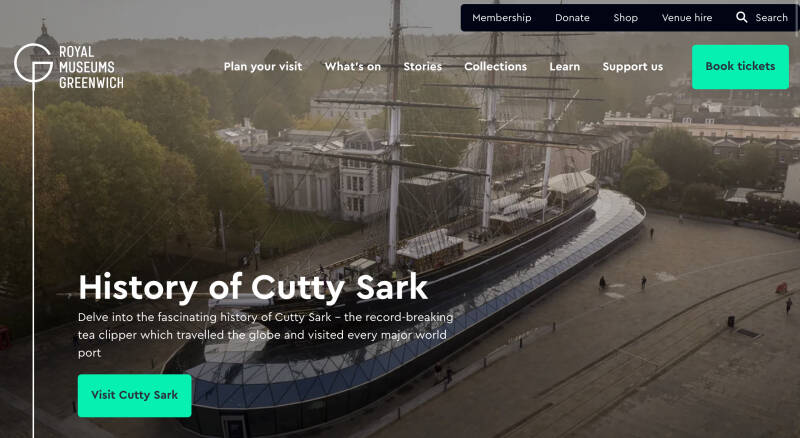
Clippers used to cross over the Oceans, but this was the fastest clipper afloat.In her best day's run 363 miles would have been clock-up, with 1/4 acre (32.000 sq.ft) do sails. Built in the CLYDESIDE shipyards, launched at DUBBARTON, 1869, she made her name bringing tea from China (107 days, she won the annul race), and later on, wool from Australia (72 days!). All this between 1883 and 1895.
In 1869 the CLIPPERS’ tea transport trade was undermined by the opening of the SUEZ CANAL!
She took the name from ROBERT BURN’s poem TAM O’SHANTER, where NANNIE, the angry witch wearing a Paisley linen cutty sark, chases TAM, a drunken farmer on his horse. The witch clutches the hair of his horse… SEE THE FIGURE HEAD!
Owned by the Portuguese Navy, from 1895. Again in Britain, bought and restored, by CAPT.DOWMAN. His widow gave it to the Incorporatad Thames Nautical Training College. From 1922 he was converted into a nautical school. Her last journey, was in 1938. In 1953 the. O llegue visited it to the. S PRESERVATION SOCIETY.
Transferred here, into a dry dock and open in 1957 by the Queen and Prince consort.
Clippers

You will be back in this area after a tour of the riverside and East Greenwich
PIER
A busy pier handling many river boat services. It was built following an Act of Parliament by the Greenwich Pier Company in 1836. It was acquired by London County Council for their steamboat service in 1905. In 1954 the upstream end was dismantled to allow the Cutty Sark into its dock. So various parts of the pier were built at various dates. It has been rebuilt again in 2010 and has become the site of a number of lurid chain restaurants. The 19th shelter was removed and rebuilt in Barbados.
FIVE FEET WALK
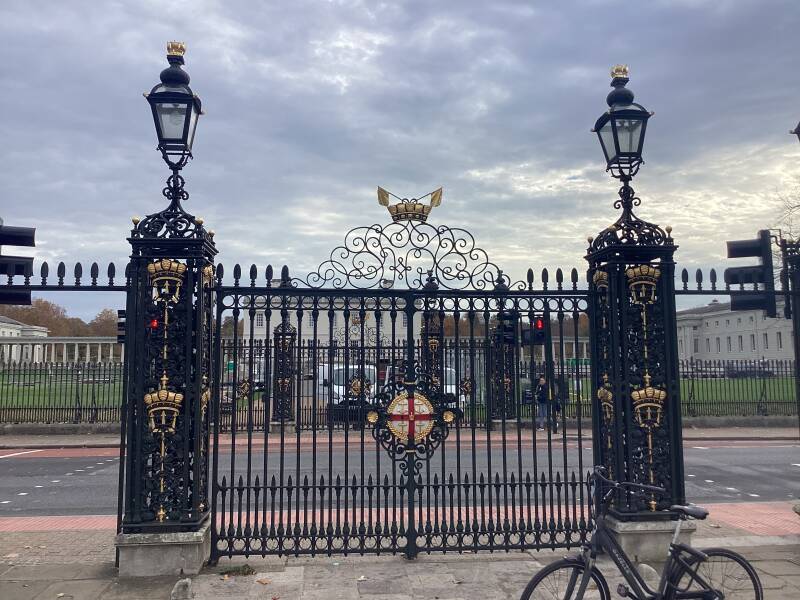
The current gate was moved to its present position in 1850. It was originally located closer to the King Charles and King William Buildings.
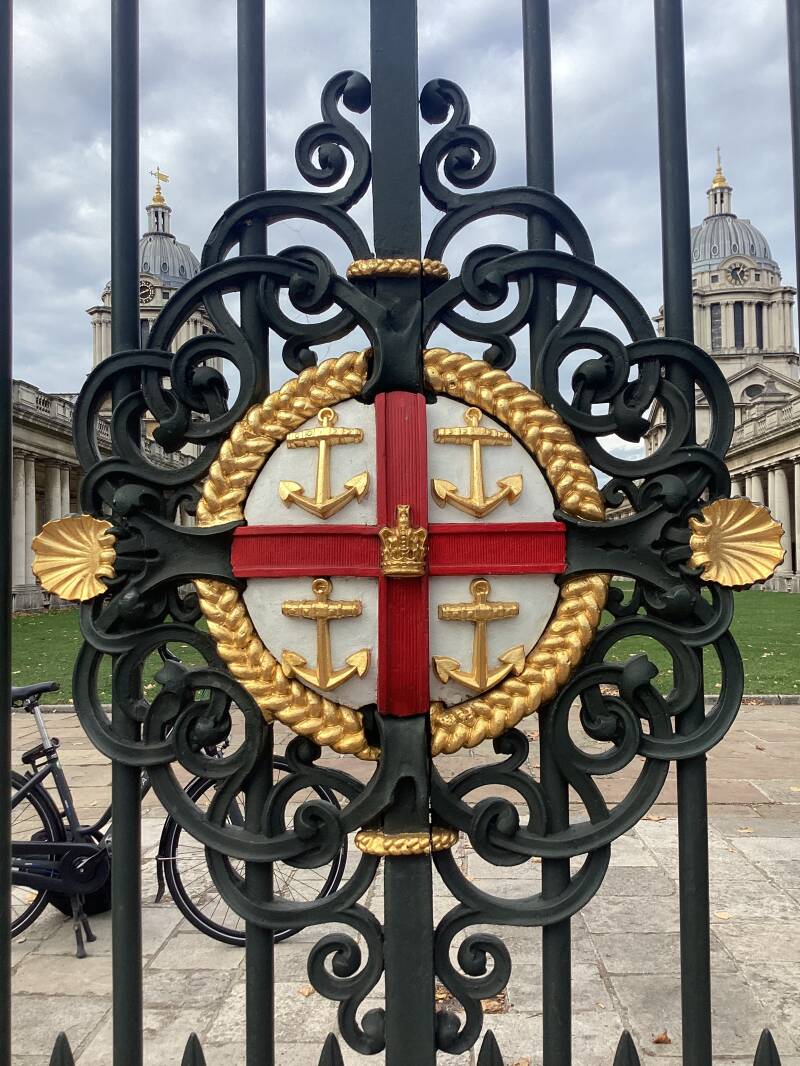
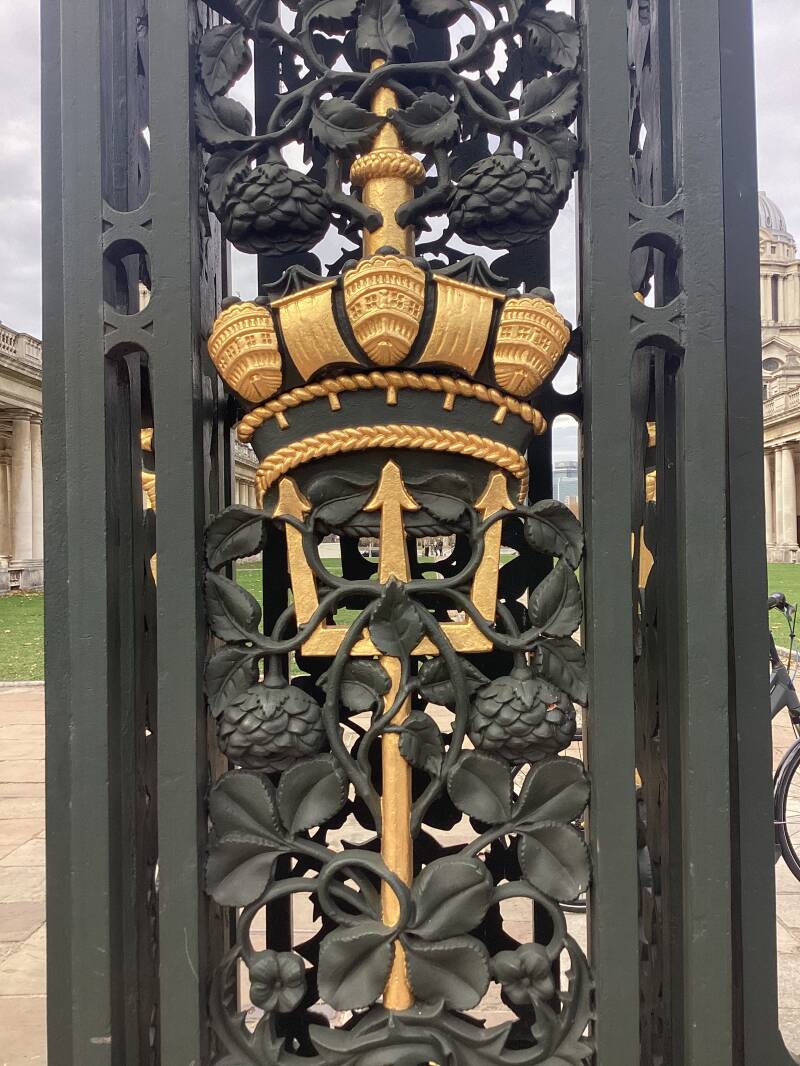
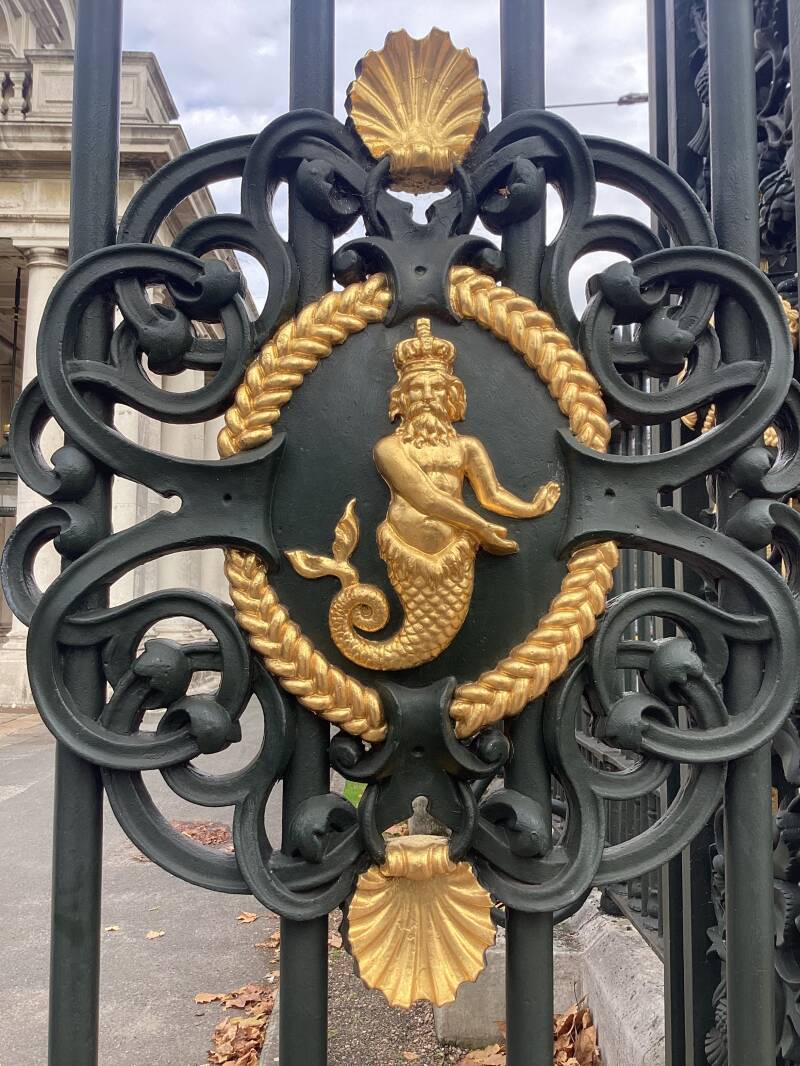
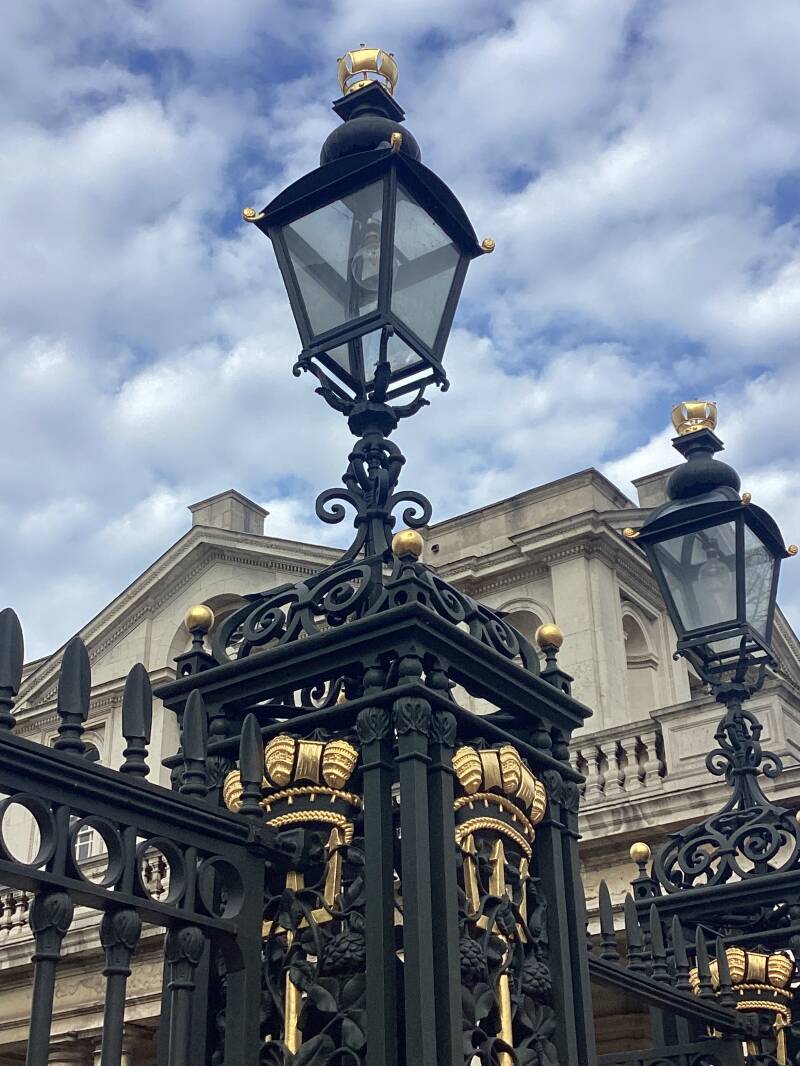
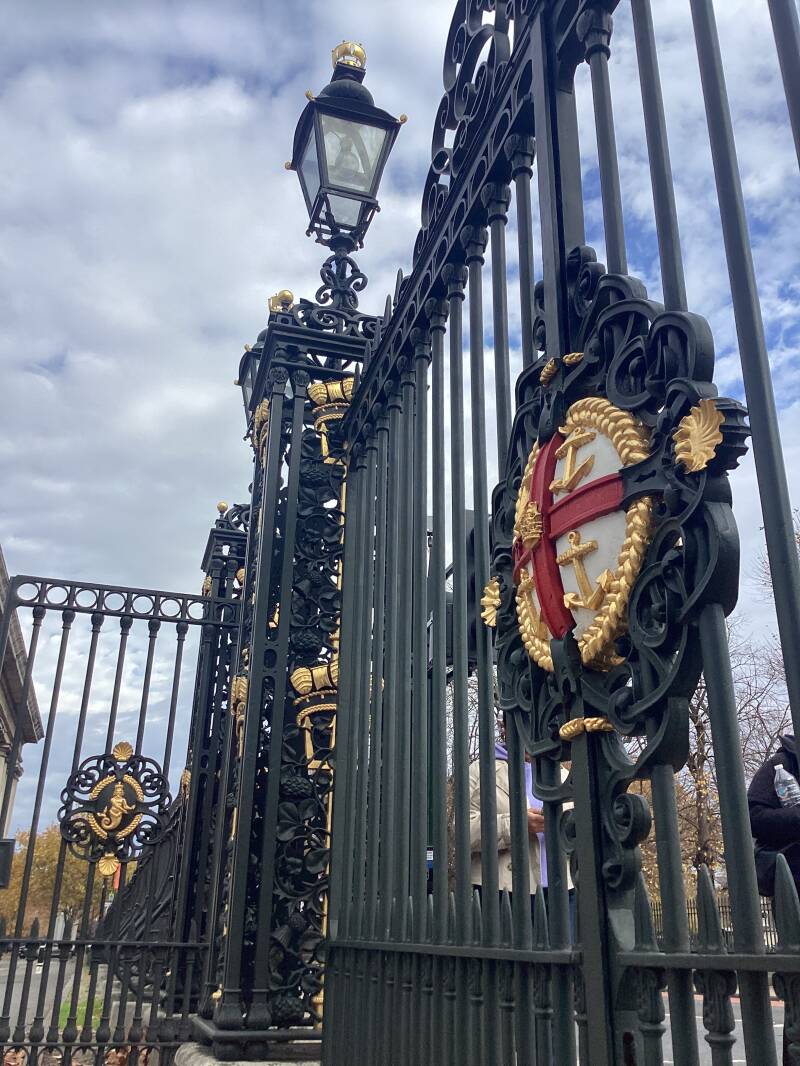
It is adorned with naval symbols, including the coat of arms of the former Royal Hospital for Seamen, anchors, a crown, and tridents.
Through the original gate Anne Boleyn was taken by boat to the Tower of London in 1536. And Admiral Nelson's body was returned to London via the watergate in a cask of brandy after his death at the Battle of Trafalgar in 1805. King George I landed at the Watergate of the Royal Hospital for Seamen (now the Old Royal Naval College) in Greenwich on September 18, 1714, when he arrived in Britain to take the throne.
George, Elector of Hanover, arrived by royal yacht from the Netherlands and disembarked at the water gates of the Sir Christopher Wren-designed building, which was at the time a hospital for naval pensioners. The landing is a significant historical event, marking the beginning of the Hanoverian rule in Britain. The moment is even depicted in the magnificent artwork in the upper part of the college's Painted Hall, created by Sir James Thornhill between 1707 and 1726, which forms a central narrative of the painting scheme.
An interesting anecdote from the day is that the waiting crowds initially cheered his son, the future King George II, mistaking him for the King due to thick fog, and many had left by the time George I actually disembarked
BELLOT MEMORIAL
OLD ROYAL NAVAL COLLEGE. Before, ROYAL HOSPITAL. Before, ROYAL PALACE

Palace


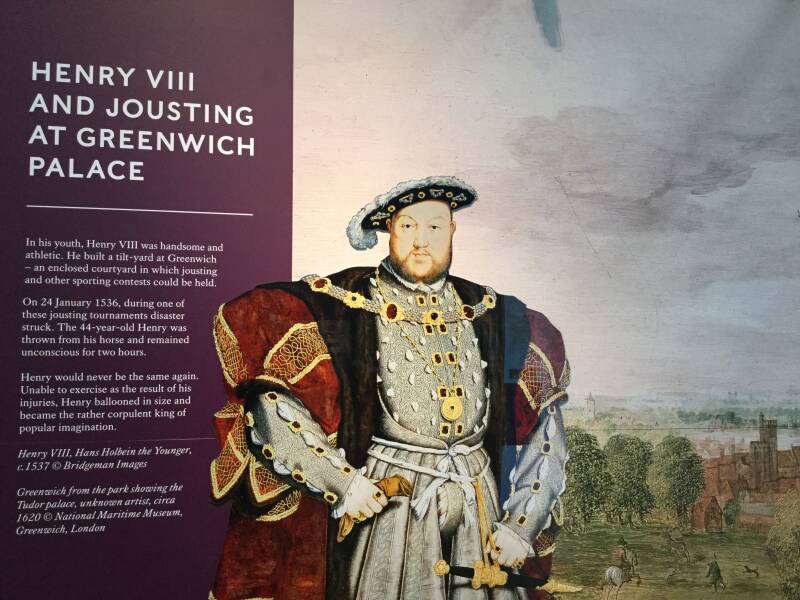
Hospital
The Royal Hospital for Seamen at Greenwich (now the Old Royal Naval College site) provided retired sailors with individual "bed-cabins," described as being a cross between a ship's cabin and a civilised bedchamber.
- These small, individual spaces were intended to provide a permanent home for the sailors and were specifically designed with a nod to their maritime background.
- Provisions: Within their cabins, the pensioners were provided with a horsehair mattress and linens. They also received specific clothing allowances, including a blue suit, hat, hose, and shoes.
.
Naval School
PEPYS BUILDING: now VISITOR CENTRE
Engineering Laboratory and squash courts themselves on the site of the College Brewery demolished in 1875. It was later known as the Pepys building. It is an ornate single storeyed building of 1875-9 with medallions of Drake, Cook and Nelson.
The exhibition of Greenwich history is owned and managed by the Greenwich Foundation.
STATUE of WALTER RALEIGH
The bronze is by William McMillan, 1959 and has been moved here from the Ministry of Defence in Whitehall where it was dwarfed. He is in Elizabethan dress with a drawn sword. It originated in an attempt to emphasise Anglo American relations in the Cold War
THE OLD BREWERY

Mews. The mews are alongside the Discover Greenwich complex and used as offices and teaching space
Brewery, the inmates of the Royal Hospital had a daily beer ration which was piped direct to the wards from the brewery the remains of which lie under and alongside the current Old Brewery restaurant. Water was supplied from a still extant deep well.
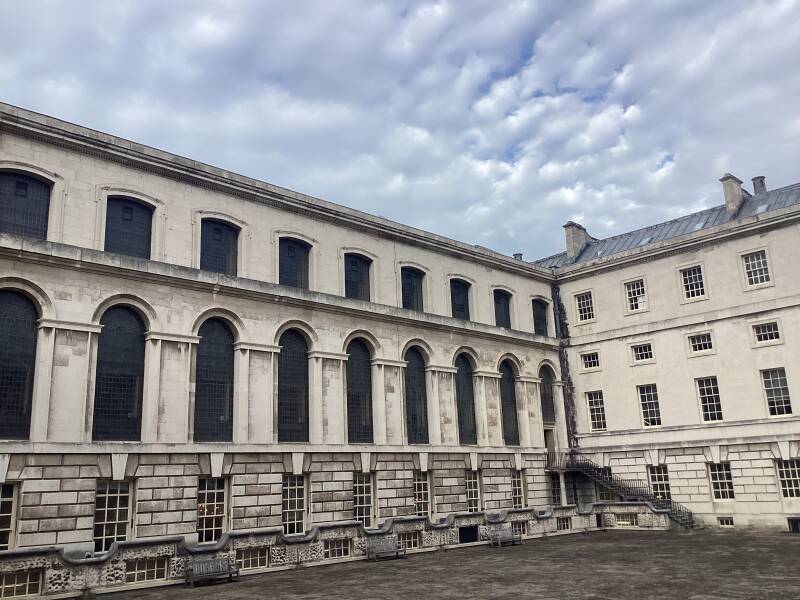
KING CHARLES COURT, now TRINITY LABAN
Although the original palace was demolished, a section of the King Charles block was already under construction as a new royal palace for him before the project was repurposed into the Royal Naval Hospital.
One of the oldest surviving parts of the site, Admiral’s House, overlooking the Thames, was once the residence of the Governor of the Royal Hospital for Seamen. Originally designed by John Webb for Charles II as part of a plan to create a royal palace to rival Versailles, it was later part of the complex to house seamen of the Royal Navy who could no longer go to sea. The Morning Room displays a collection of items relating to Admiral Nelson. A rare chance to view this elegant space.

Trinity Laban Conservatoire of Music and Dance was formed by a merger in 2005 between Trinity College of Music in Greenwich and the Laban Centre in Deptford.

Behind King Charles Court
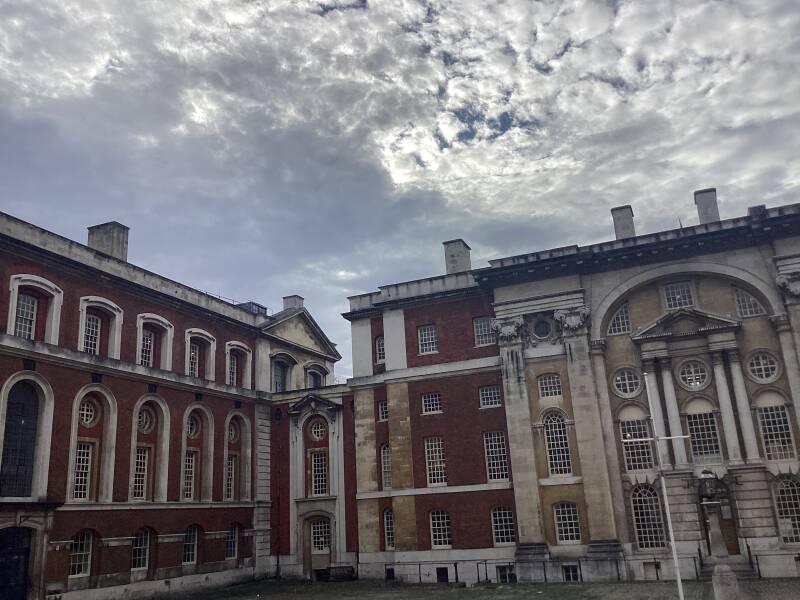
KING WILLIAM COURT. Now, UofG. It houses the PAINTED HALL
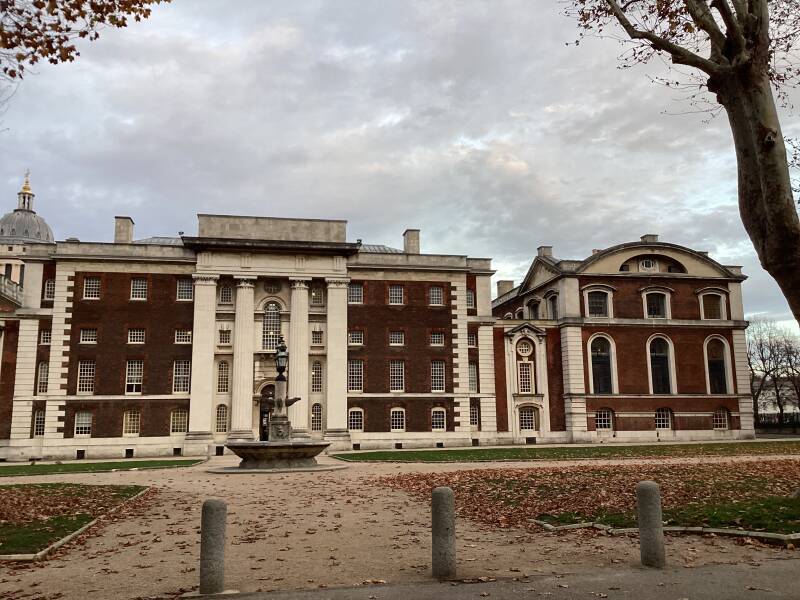
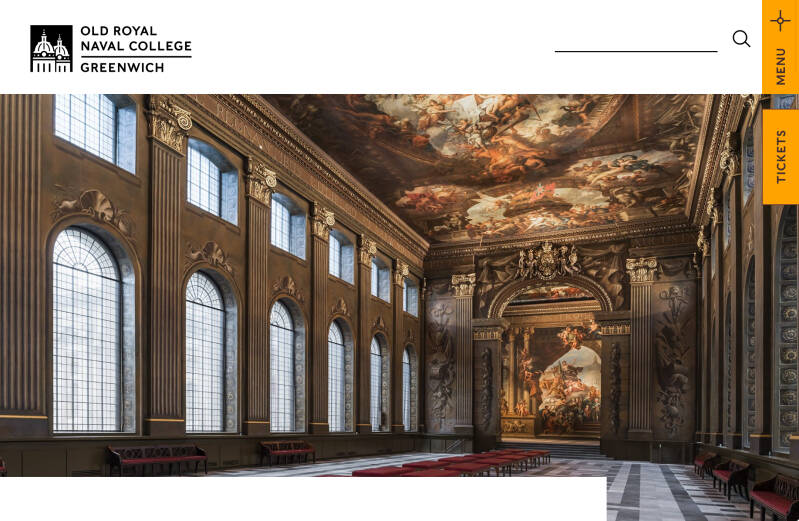
Although the overall master plan for the complex was by Sir Christopher Wren. The building was completed under the direction of Hawksmoor and Vanbrugh, with construction taking place between 1698 and 1712.
Courtyard
Hawksmoor’s work in the King William Courtyard, with its massive scale and sculptural enrichment, is a quintessential example of English Baroque architecture. The Courtyard is overlooked by the Nelson Pediment, created in Coade stone to a design by the American-born history painter, Benjamin West.
Undercroft: the old seamen refactory and…
Both the Painted Hall and its opposite neighbour, the Chapel of St Peter and St Paul, have undercrofts. To look at them today you’d think the one under the Painted Hall, where the pensioners ate, was about half the size of the one under the chapel. It’s not.
When the pensioners moved out, one end was bricked up and turned into an industrial-sized kitchen for the new Naval College. The Doric columns, arches, niches and vaulting were left — albeit covered in 1930s tiling, thick coats of institution-yellow paint, Health & Safety notices and giant steel shelving units.
As part of the restoration, the nasty partition wall and 20th century clutter is going, taking the King William Undercroft to something like the same size as its twin beneath the chapel, currently used by students as a cafe (tip: the student caff is also open to the public if you’re looking for a cheap sandwich in Greenwich). During the work, remains of the Tudor palace of Placentia were found beneath.
WATERGATE
Statue of GEORGE II
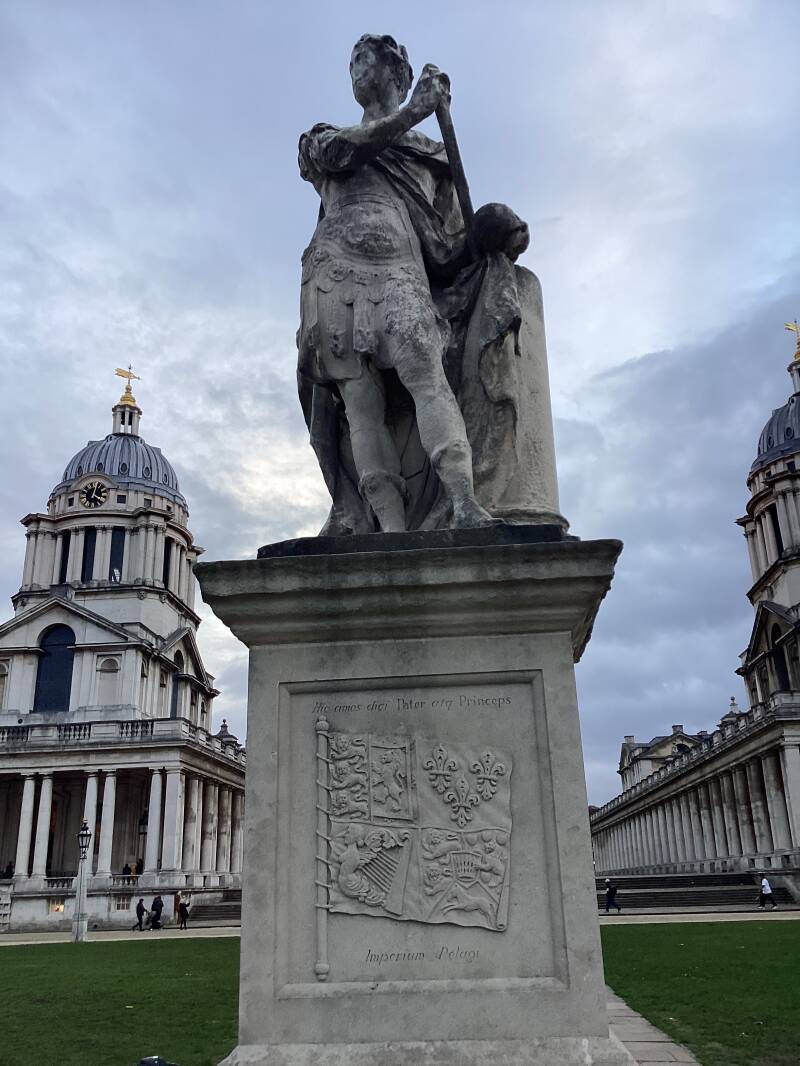

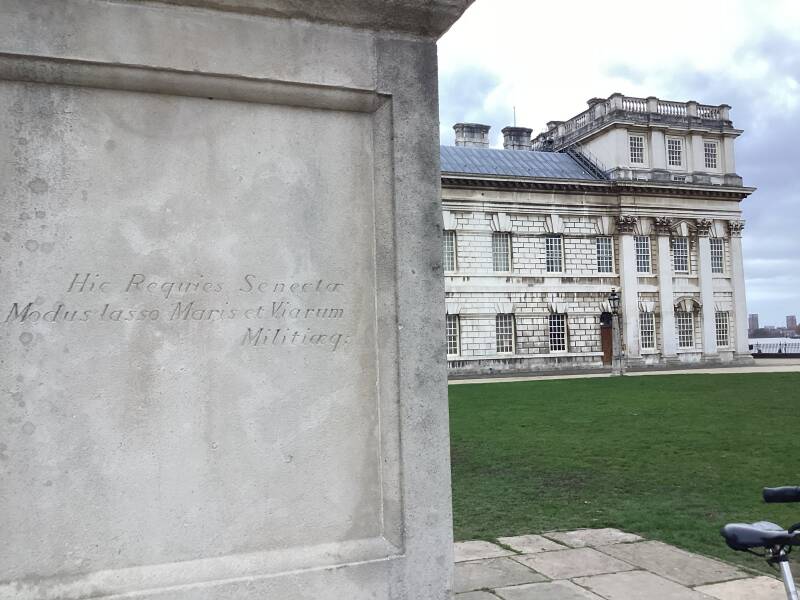
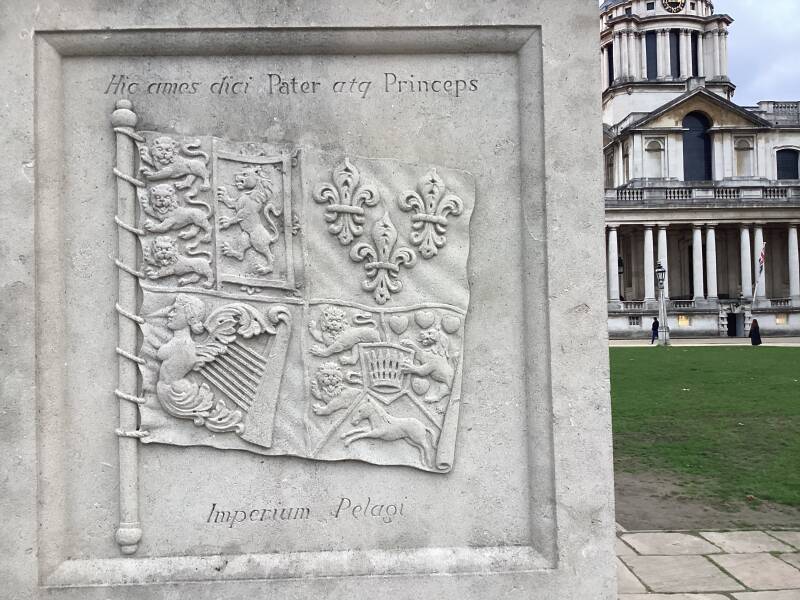
Plaque in memory of GREENWICH ROYAL PALACE
QUEEN ANNE COURT, now UNIVERSITY OF GREENWICH
With construction beginning around 1699. While the initial design was by Wren, Hawksmoor also played a significant role in its creation, and construction continued until completion around 1740. Thomas Ripley built the end pavilions facing the river.
Highlights include council boardroom, grand staircase and restored Portland stonework. Refurbished in 2000 for University of Greenwich
Queen Anne Court now houses the new headquarters of the University
Jacobean Undercroft
survival from the early 1600s and the only remaining intact room from Greenwich Palace.

Behind Queen Anne Court
QUEEN MARY COURT. Now, UofG. Chapel of ST.PETER and ST.PAUL
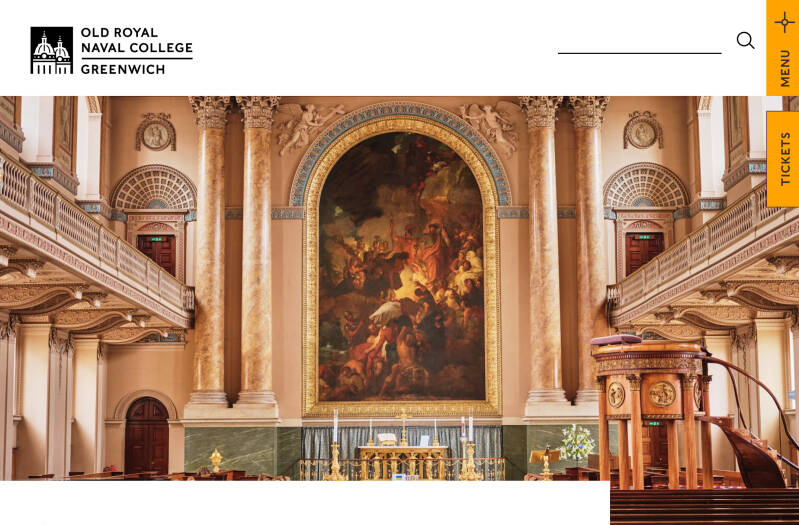
Queen Mary's Court was the last of the four Royal Naval Hospital buildings to be completed, following Christopher Wren's layout, but designed and built by Thomas Ripley.
The university has retained the historic layout throughout. The cabin walls have been stripped back to reveal original original timber panelling, barrel vaulting and Portland stone.
A secret, downstairs
Once known as the Chalk Walk for the underfoot crunching of tobacco pipes discarded by smoked-fuelled pensioners, the Ripley Tunnel runs underneath the street-level stone steps between the two buildings.
One more secret…
At the chapel end, behind a locked door, hides a double-lane skittle alley, built by the pensioners themselves in the 1860s and still boasting the original lanes, balls and pins.
- Thanks to THE LONDONIST!. Here you have ALL THE SECRETS!: https://londonist.com/2016/03/secrets-of-the-old-royal-naval-collegeBehind
NELSON
THE TRAFALGAR TAVERN

It was reopened as a public house in 1965, when its old interior was gutted and lavishly remodelled by craftsmen from Pinewood Studios giving every appearance of 1960s film set. So, if the dazzlingly decorated Trafalgar Tavern appears to retain the essence of nineteenth-century opulence… now you know: it is a pure recreation (by the way, THE ADMIRALTY P.H. is another recreation of a “Victorian” institution!).
WHITEBAIT DINNERS https://www.londonremembers.com/memorials/lord-nelson-greenwich
THE YATCH P.H.
TRINITY HOSPITAL
It was originally built in 1613–14 by Henry Howard, Earl of Northampton, on the site of Lumley House (childhood home of Robert Dudley, 1st Earl of Leicester). Howard set up his charity in 1613 for 12 'poor men' of Greenwich and eight from his birthplace in Norfolk, hence the name Norfolk College by which the almshouses were also known[1] (it is, for example, shown as Norfolk College, on William Faden's Fourth Edition of Horwood's Plan, 1819).[2] It was one of three Trinity almshouses founded in the last year of Howard's life, the others being in Clun, Shropshire and Shotesham, Norfolk.
POWER STATION
Built by the London County Council Architect's Department, General and Highways sections, to power the Council tramways in 1902-10. Commissioned by L.H. Rider the Authority Electrical Engineer.
It is in Simple stock-brickwork on a monumental scale. The four tapering octagonal chimneys have been truncated at two-thirds height, because Objections from the Royal Greenwich Observatory meant the two chimneys on the landward site had to be reduced. Subsequently all chimneys reduced.
There are dates on the rainwater hoppers but they vary from 1903 to 1908.
Originally in 1906 had four generators and Manhattan type engines. It was the last station using slow speed reciprocating steam engines rather than turbines and replaced by steam turbines in 1922.
It supplied the whole tramway network for the London County Council. Originally fired by coal but later gas turbines for the London Underground. It ran by remote control from Lots Road but that station has now closed. It is still in use as the standby for London Underground. It was refitted in 2003 and about to be refitted again. On the west side is a large concrete coal bunker from 1927 but there are now oil tanks. There is also a separate switch house and fronting onto Hoskins ‘Street is the Pier Forman’s Lodge.
There are several original tram tracks and walling. It is the oldest power station still at work in Britain and possibly in Europe and effectively by the same operators.
Coaling jetty
designed separately from the power station by Maurice Fitzmaurice and built 1903. .originally rails ran to the platform at the top which had cranes and was served by coal trucks.
ANCHOR IRON WHARF
On the base of the monument: In 964 King Edgar granted this land to the abbey of St Peter's in Ghent, Flanders. Henry V re-possessed it in 1414. After the English civil war Charles II granted the land to Sir William Boreman in 1676. He was clerk to the Board of Green Cloth and involved with the design of Greenwich Park. He also founded Green Coat School. In 1699 his widow sold the estate of Old Court Manor to Sir John Morden. He had already built Morden College in 1695 to accommodate merchants who had lost their estates by accidents and perils of the seas.
In 1705 Sir Ambrose Crowley, an iron-maker, moved to a riverside mansion which he renamed Crowley House and built Crowley's Wharf. In 1953 Charles Robinson moved his premises to what became Anchor Iron & Crowley's Wharf. The principal cargoes were scrap iron, lead ingots, metal and glass.
On the lower small plaque: Anchor Iron, 2004
Wendy Taylor CBE
Commissioned by Berkeley Homes South-East London Ltd.
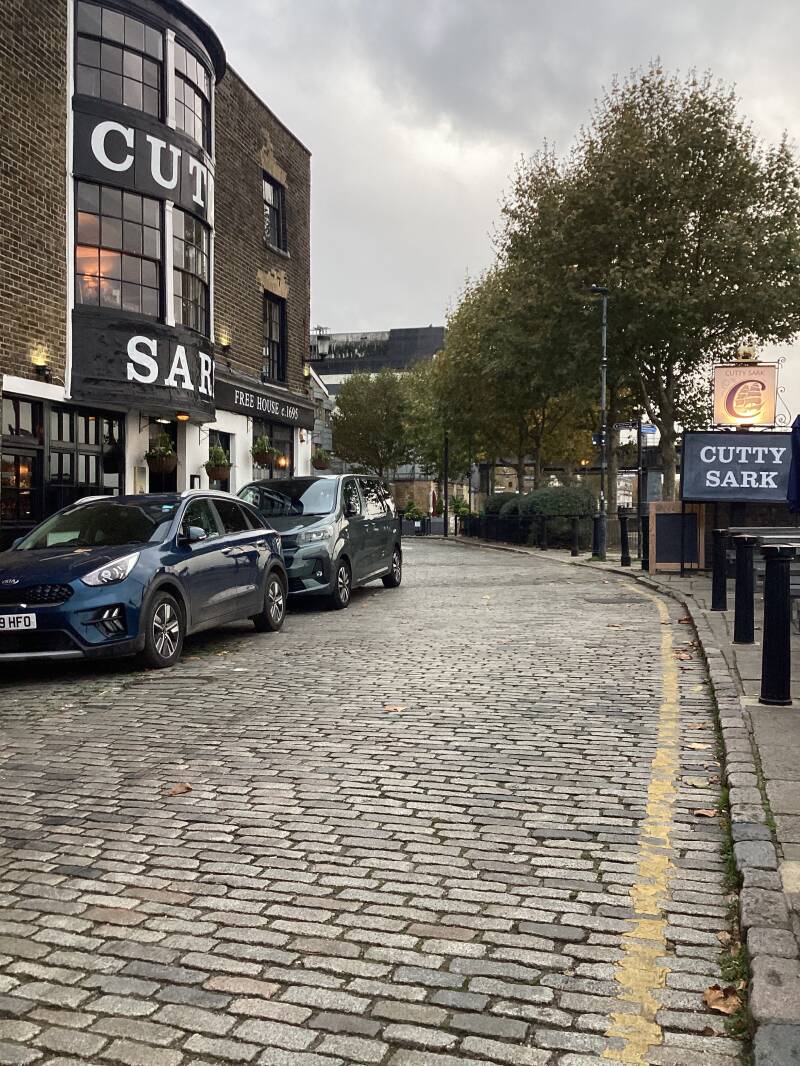
CUTTY SARK P.H.
Union Wharf?
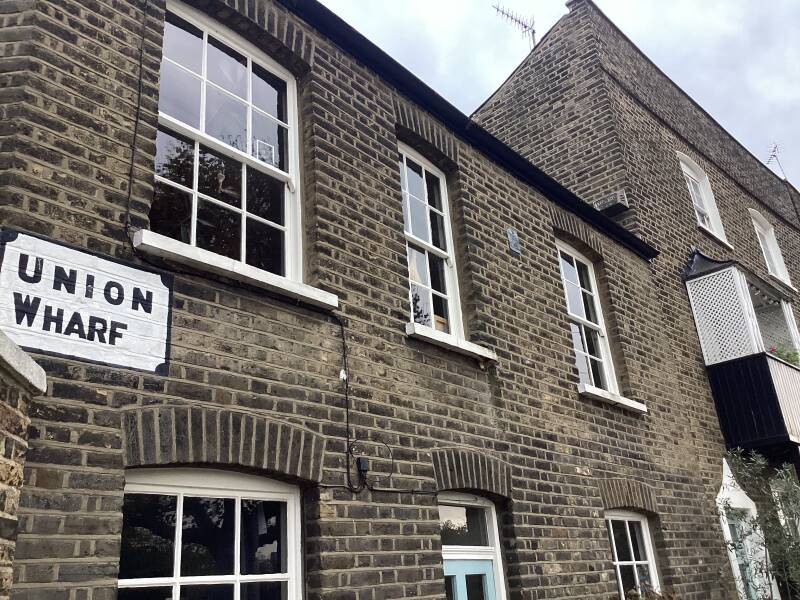
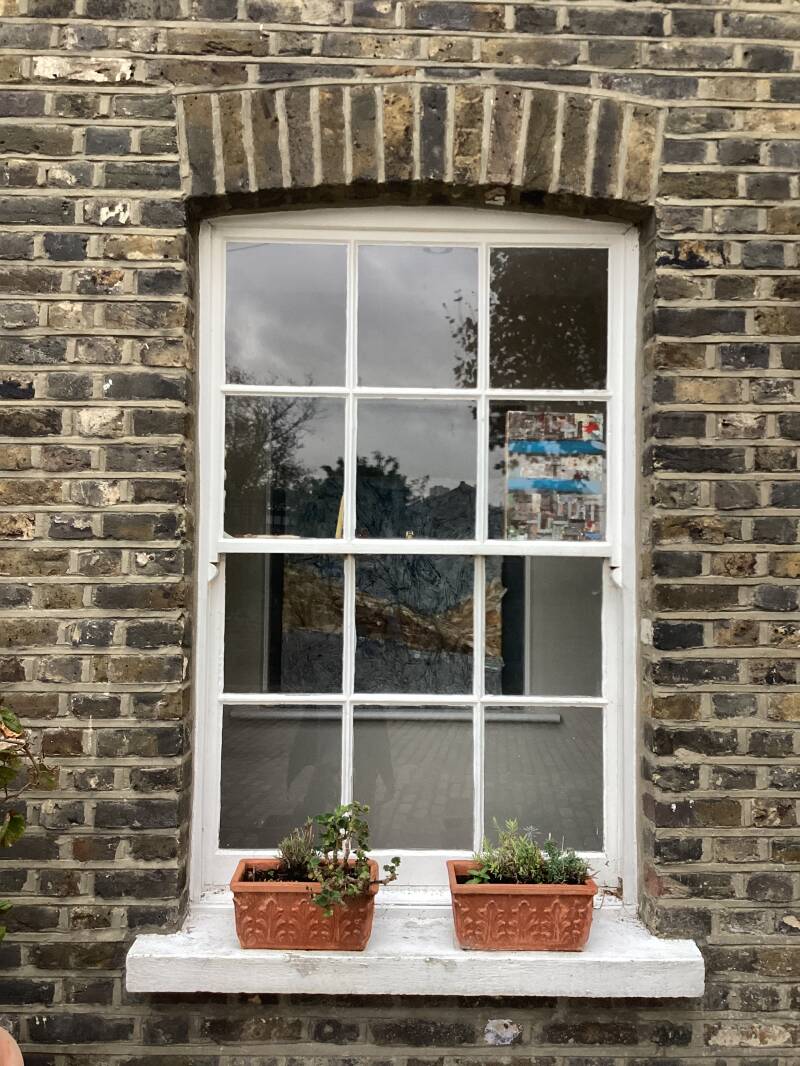
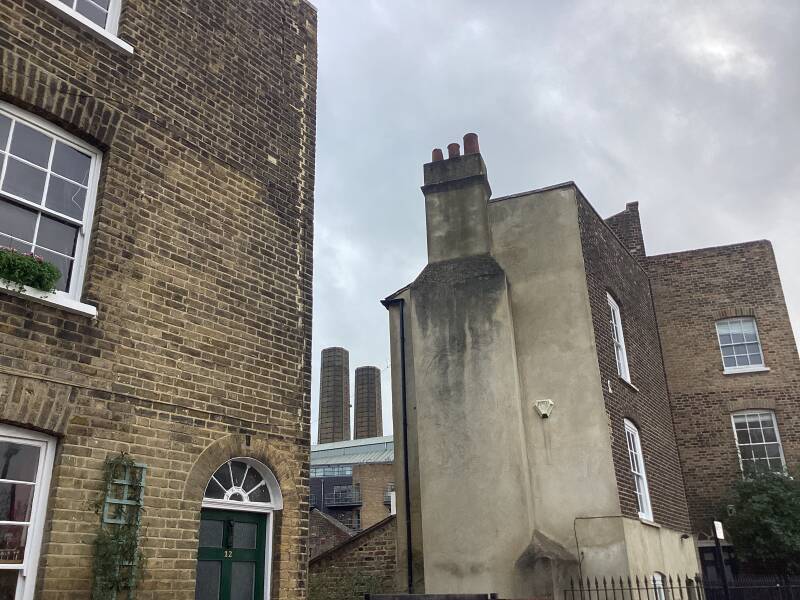
“M.C 1695” property marks
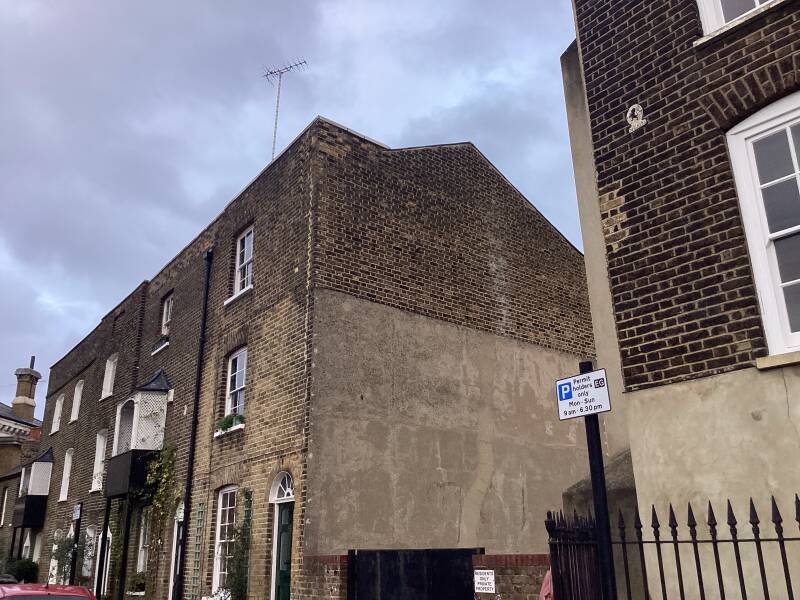
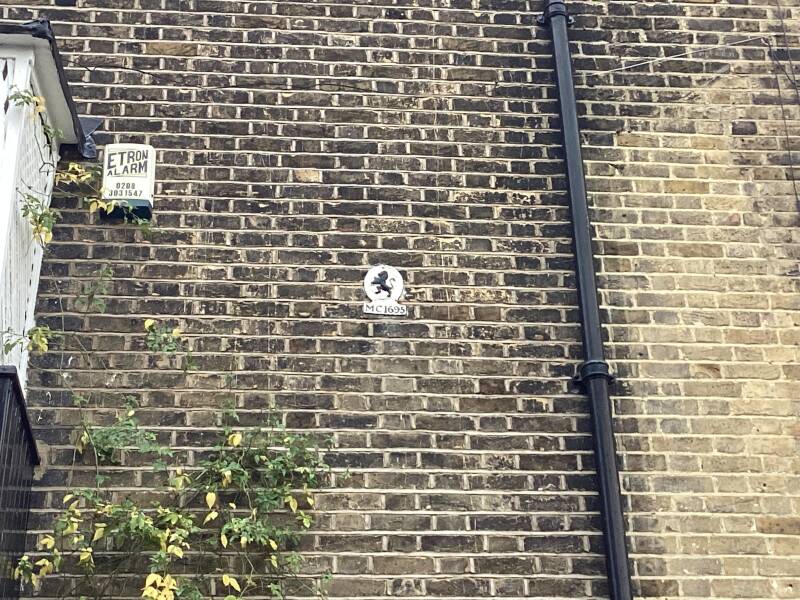
Ballast Quay
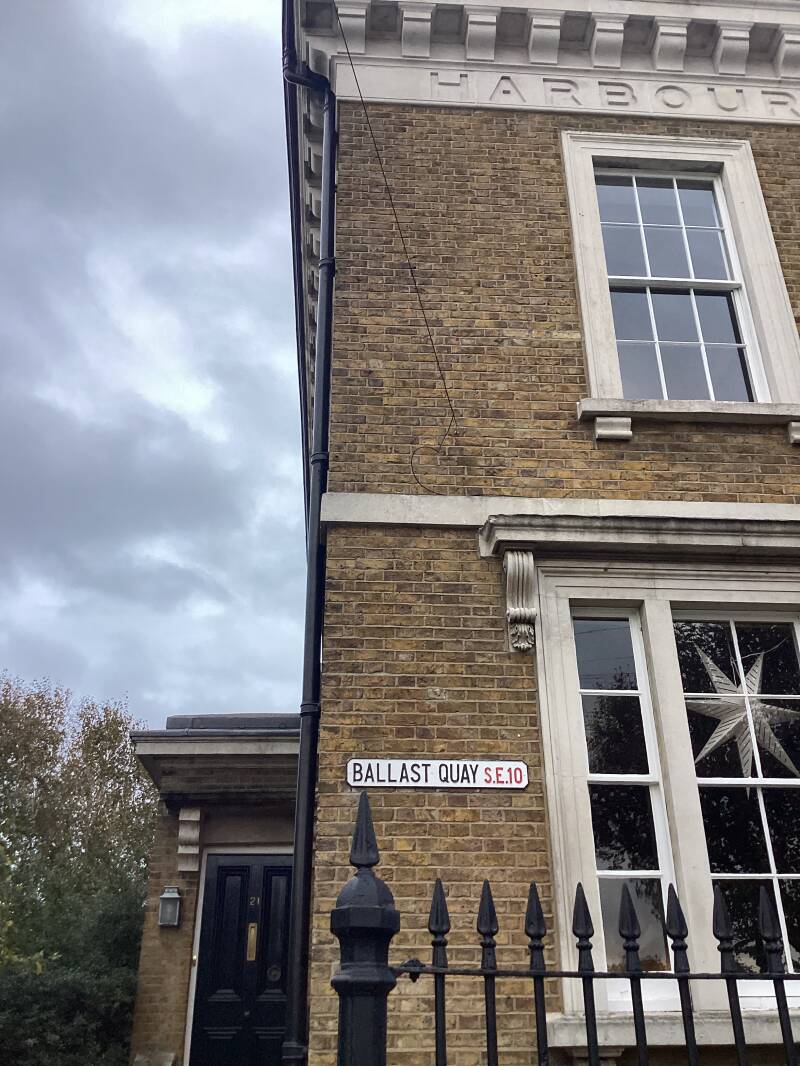
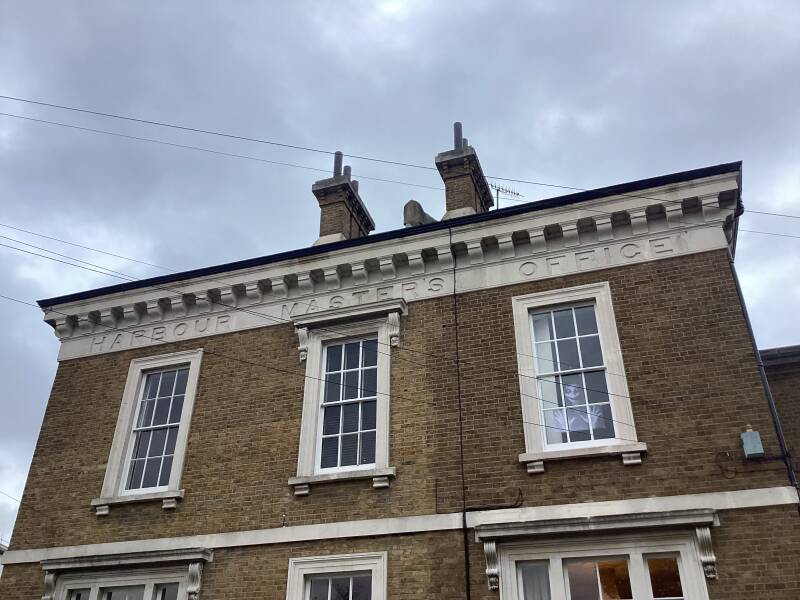
HARBOUR MASTER building

The THAMES PATH route continues on following the riverside. The Greenwich Town centre route diverts from here
EAST GREENWICH
while central areas of Greenwich avoided industrialisation, remaining elegant oasis of art, books and antique shops, this was a solidly working class area, the man power for London’s heavy industry lived here.
Conservation Area
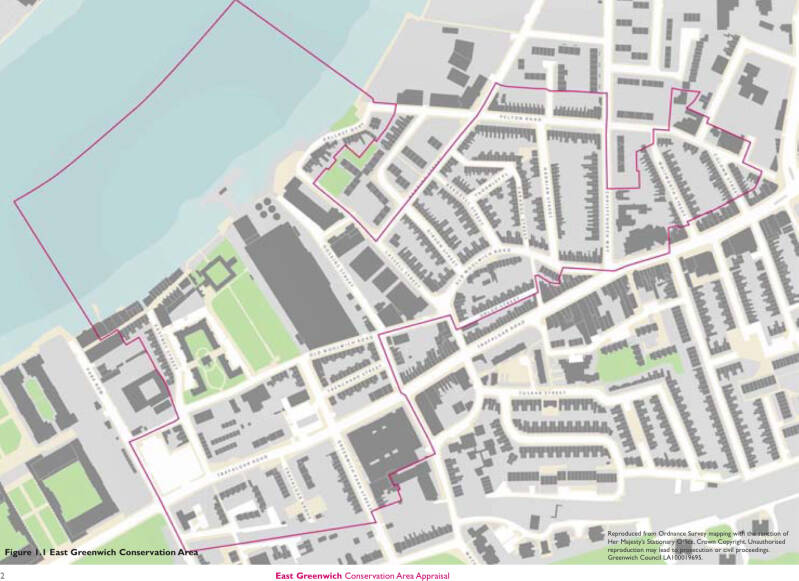
Pelton Road, Enderby St., Banning St., Lassel St., Collington St.
Terraces of Victorian houses and cottages, and more recent social housing
THE PENTON ARMS P.H.
NOT on the route: WHITWORTH ST. Terraces of cottages typical of the area
Morden college mark
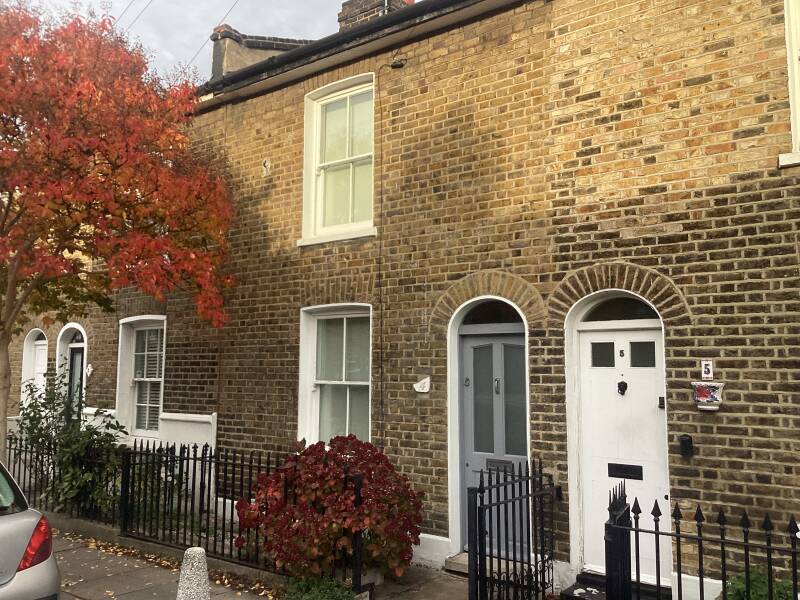
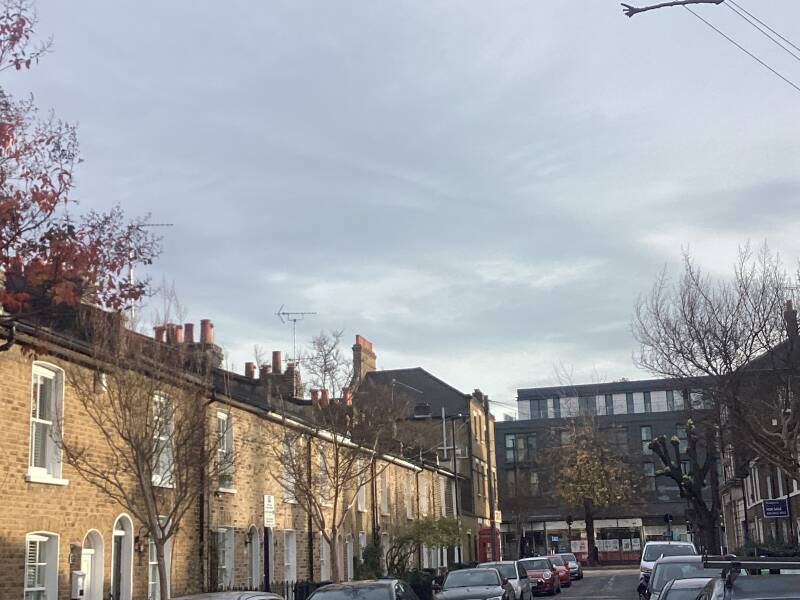
Elizabeth Terrace
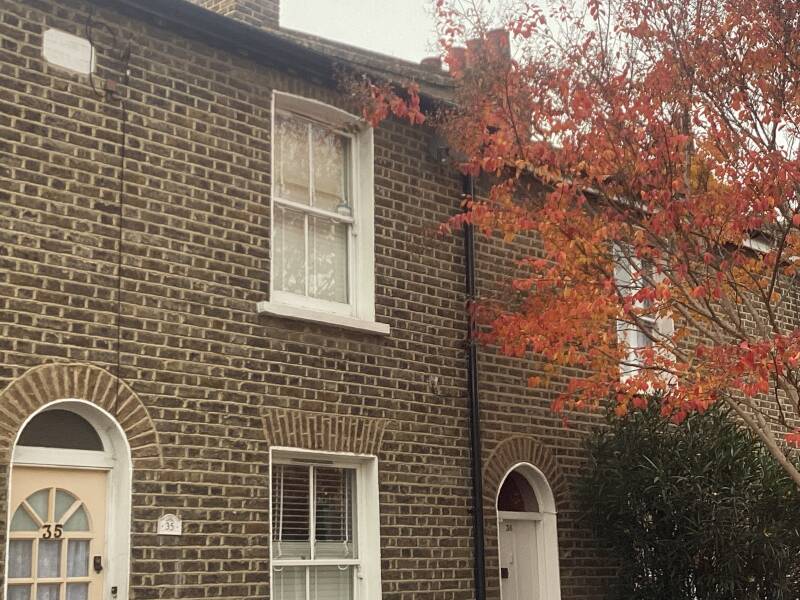
Hoskins Road
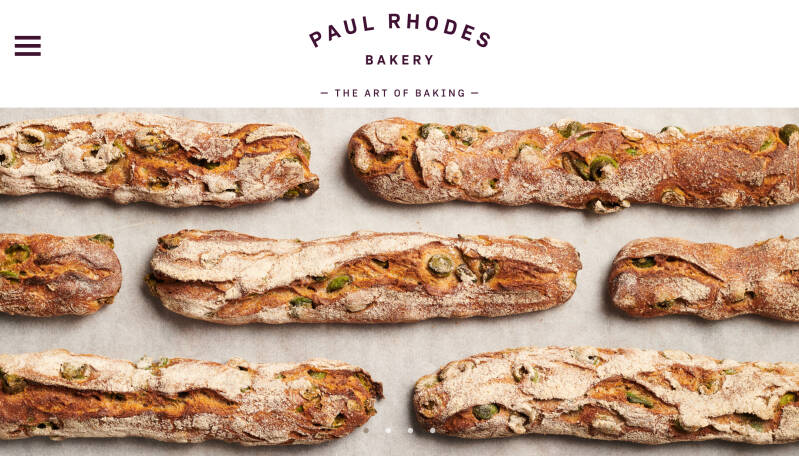
PAUL RHODES’ BAKERY!
Old Woolwich Road
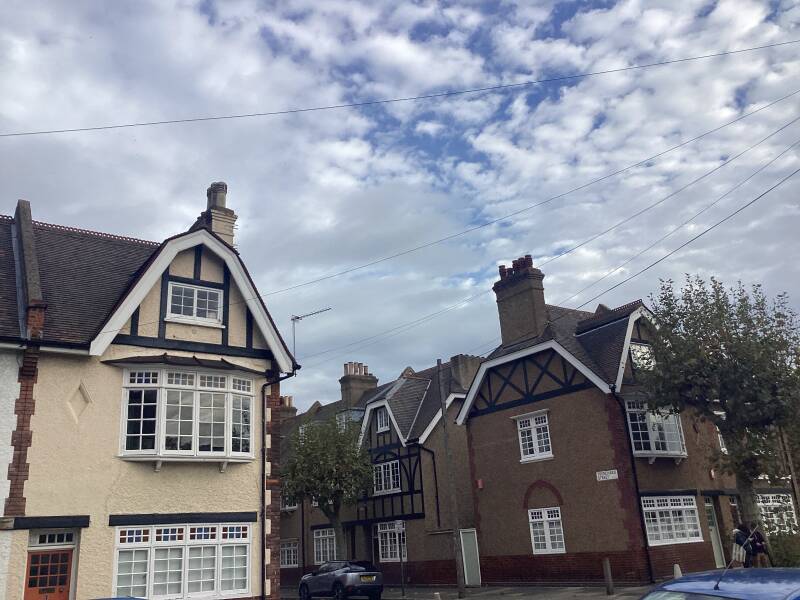
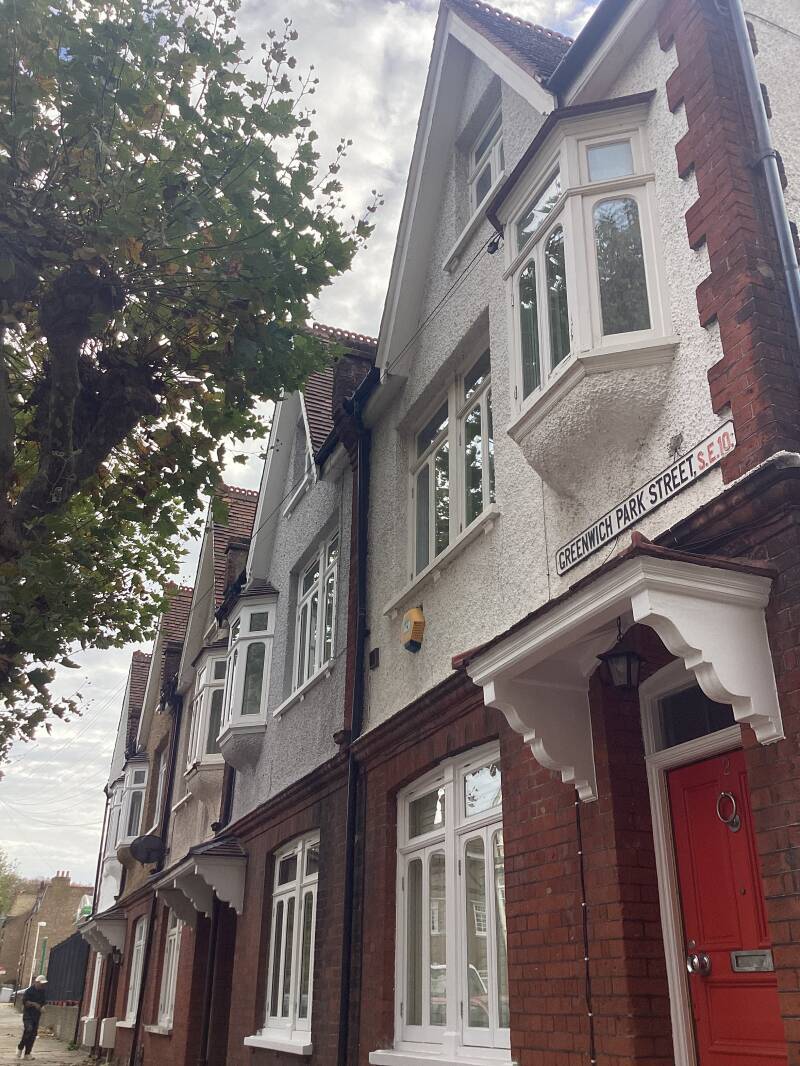
Area’s Housing
Former P.H.
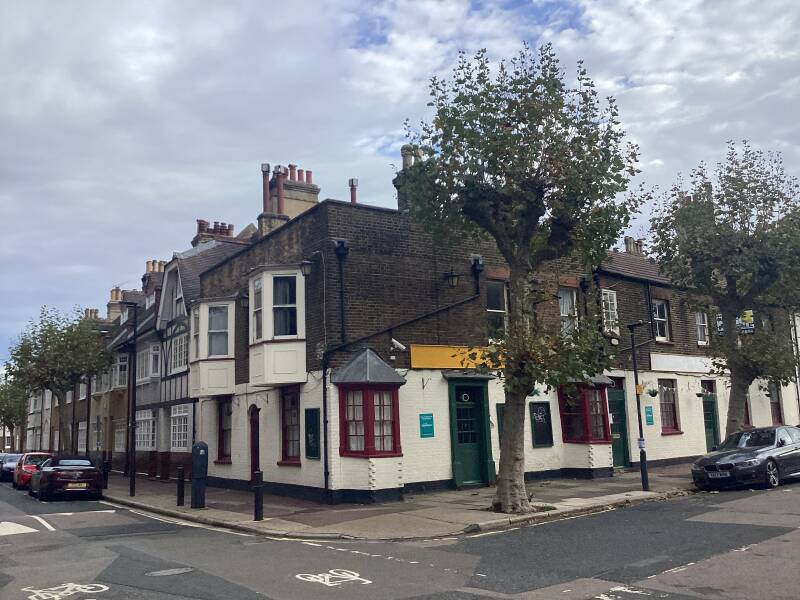
The back of GREENWICH POWER STATION
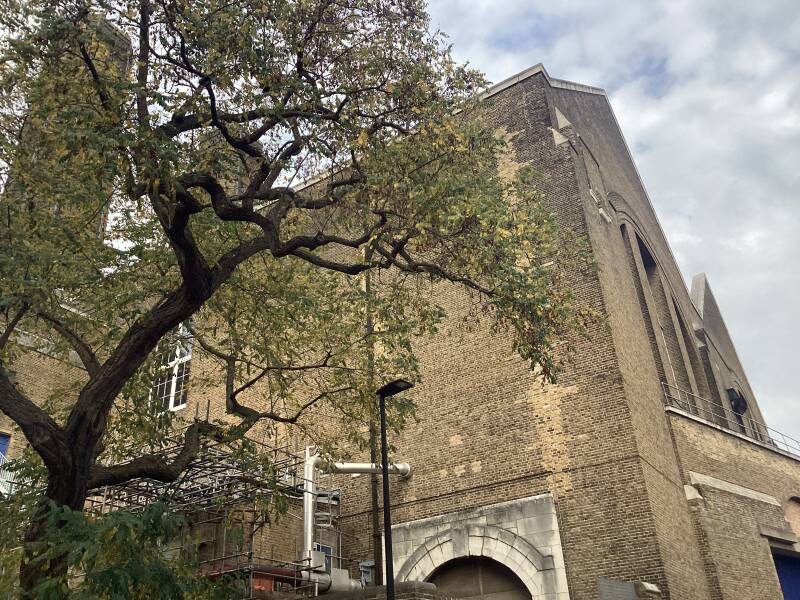

The back of TRINITY HOSPITAL
“Et suis spatiis transeunt universa sub caelo"
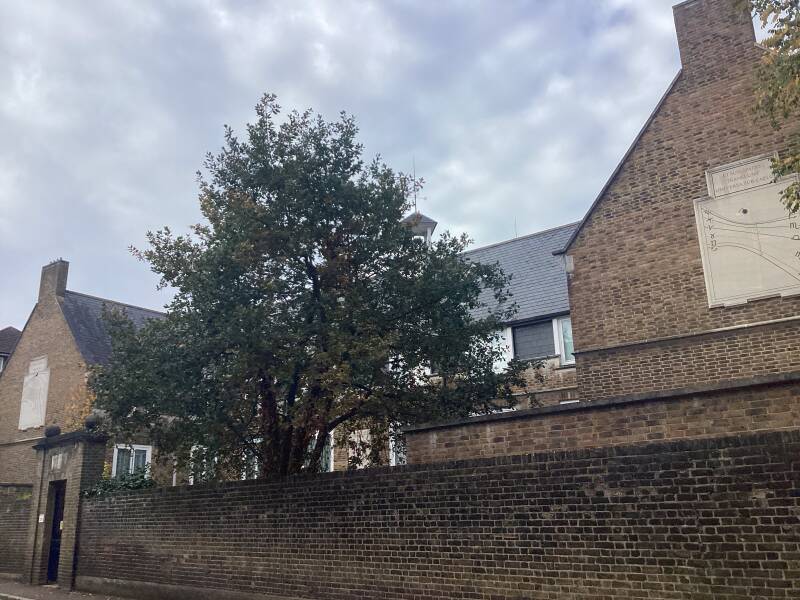
From the Bible, specifically Ecclesiastes 3:1. It is part of the more complete phrase, "omnia tempus habent et suis spatiis transeunt universa sub caelo". The phrase translates to "for everything there is a season, and a time for every event under heaven," or "all things have their season, and in their times all things pass under heaven".
MERIDIAN PRIMARY SCHOOL (former OLD WOOLWICH ROAD SCHOOL)
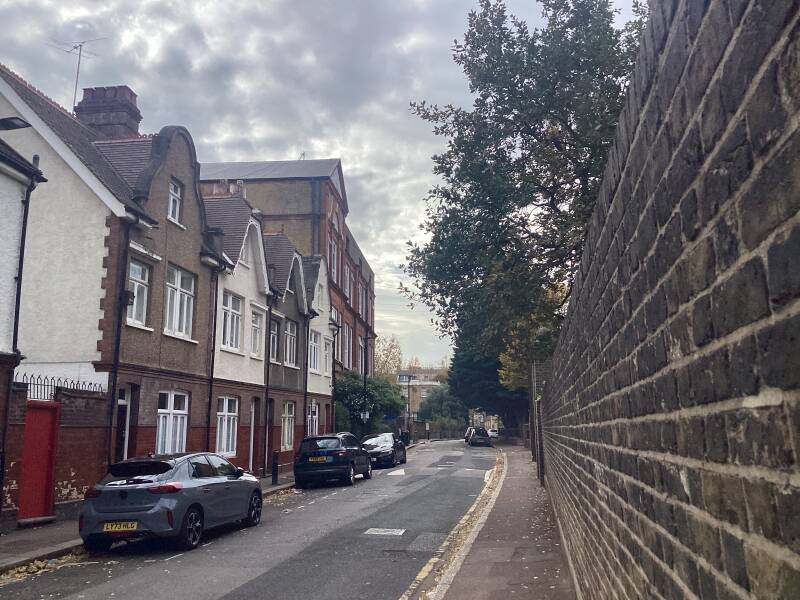
Former THE MAN ON THE MOON P.H.

Housing: HARDY COTTAGES
TRAFALGAR QUARTERS
Park Row
Cross over TRAFALGAR Road

See next chapter for
NATIONAL MARITIME MUSEUM
QUEEN’S HOUSE

TRAFALGAR ESTATE
Railway Tunnel!
Park View
Housing: Georgian, Victorian
THE PLUME OF FEATHERS P.H.
GREENWICH MERIDIAN MARK
GREENWICH ROYAL PARK
Boating Lake
Queen’s Orchard

Walk (cycling not permitted) to the QUEEN’S HOUSE and the NATIONAL MARITIME MUSEUM (see next chapter)

Regular route: Along Romney Road and enter the OLD ROYAL NAVAL COLLEGE (UNIVERSITY OF GREENWICH)
QUEEN MARY COURT, housing the CHAPEL OF ST.PETER and ST.PAUL, and UNIVERSITY of GREENWICH
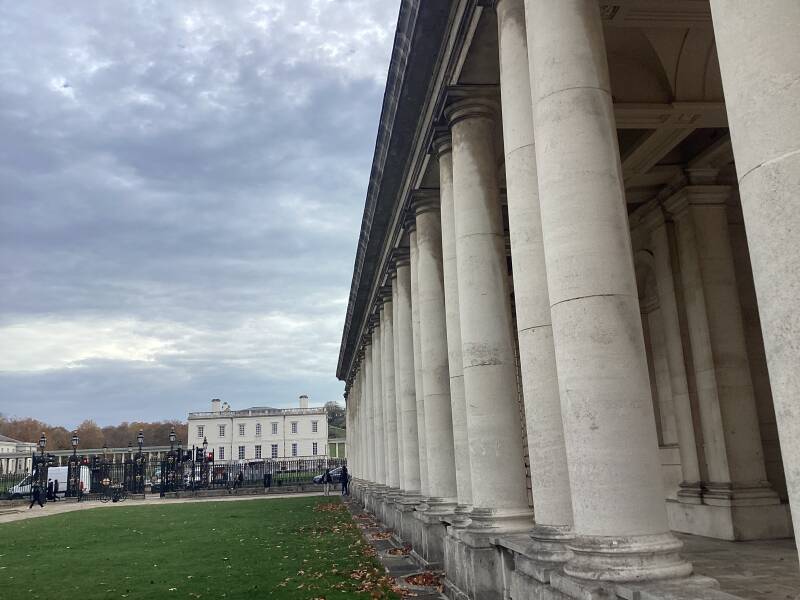
THE COLONNADES
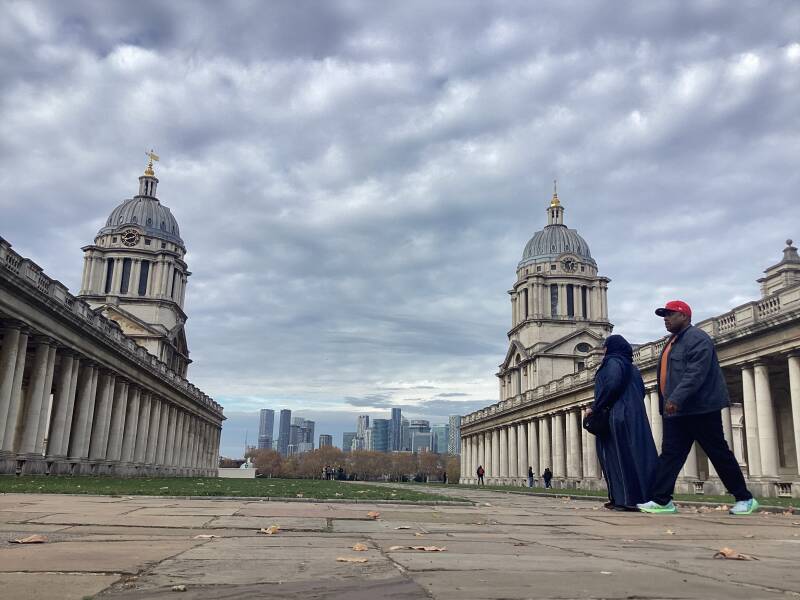
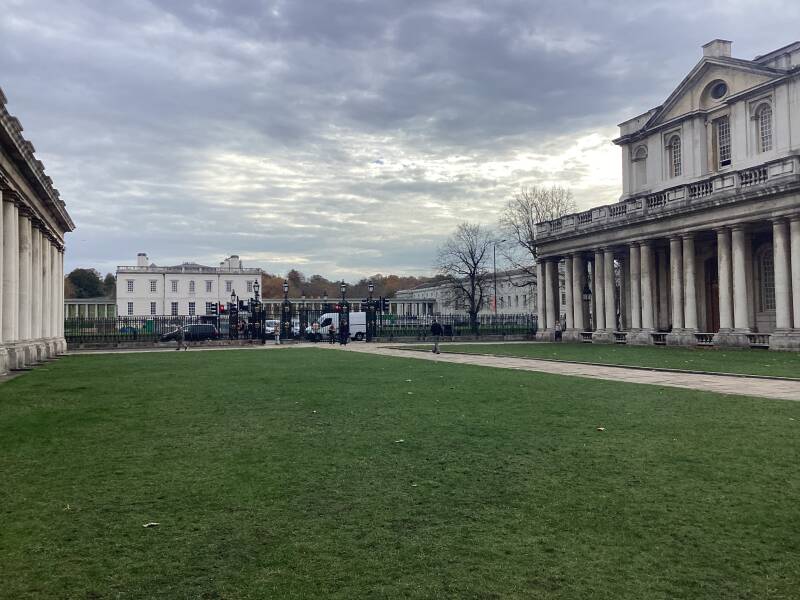
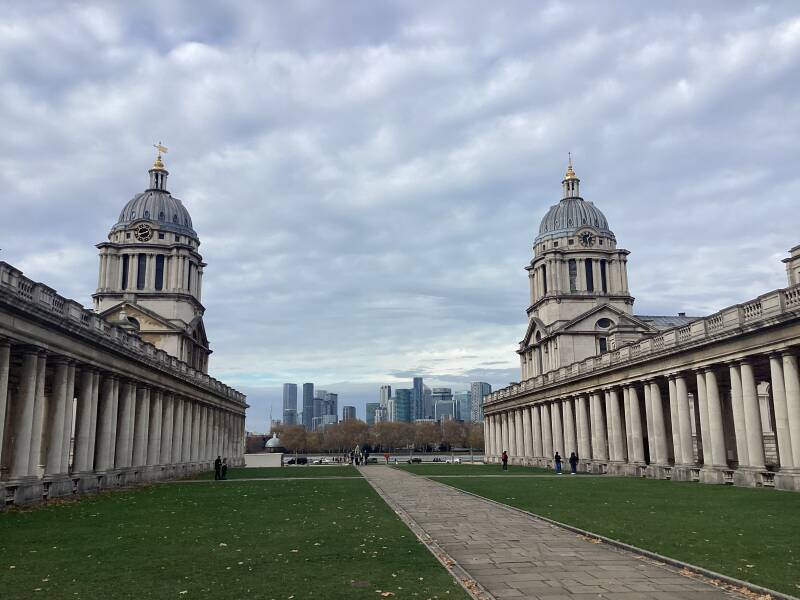


Gate
KING WILLIAM COURT, where the PAINTED HALL is
THE NELSON ROOM
Remains of the FRIARY?
located immediately next to the Greenwich Palace, known as the House of the Observant Friars. Founded in 1485, its church served as a royal chapel and hosted key events like the baptisms of Mary I and Elizabeth I, and the marriage of Henry VIII to Catherine of Aragon. The friary was suppressed during the Reformation, and though re-established, its occupants were finally expelled by Elizabeth I in 1559, after which its buildings were incorporated into the palace and eventually demolished.
DEADNOUGHT BUILDING, former infirmary of the Royal Hospital
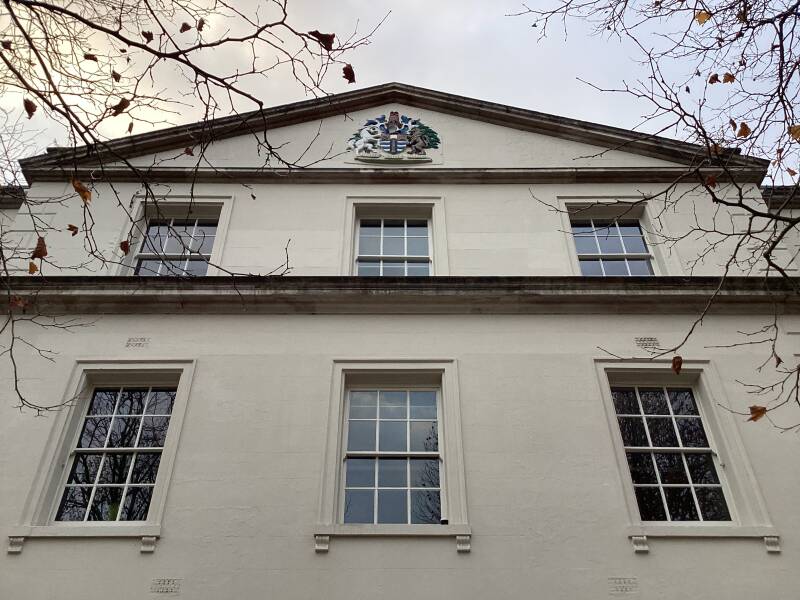
The Dreadnought site has been in use for several centuries as a stabling area, a hospital, then a place of learning.
building was originally constructed (1764-68) by Greenwich Hospital as its infirmary for treating sick Greenwich Pensioners. Previously patients had been accommodated within the main buildings but funds made available by the Admiralty at the end of the Seven Year’s War enabled the construction of separate accommodation. A further 'Helpless Ward' (part of which is now incorporated in the Stephen Lawrence Building) was added in 1808 but in 1811 a fire destroyed much of the north and west sides and the main building. Redevelopment and later adaptation (1835-45) included the complex being stuccoed as it appears externally today.
First hospital, a ship…
The hulk of the Dreadnought replaced that of the Grampus in 1831. The hospital ship was entirely separate from the Greenwich hospital, catering for sick merchant mariners of any nation, under the care of the Seamen's Hospital Society. The Dreadnought was superseded in 1870, the Society moved to the infirmary of Greenwich Hospital, and the hulk was later broken up for salvage
ORIGINALLY A HOSPITAL SHIP: https://wellcomecollection.org/search/images?query=tnbnn9nn
Greenwich Hospital finally closed in 1869 and the infirmary was taken over from 1870 by the (merchant) Seamen's Hospital Society. It was renamed the Dreadnought Seamen's Hospital and replaced the last of three hospital ships on the Thames occupied by the Society from 1821 (the last two being named Dreadnought). The building was the administrative headquarters of the Society, treated patients and also carried out research into tropical diseases.
The Seamen's Hospital was funded by donations and the plaques in the Dreadnought building commemorate the societies and individuals who contributed towards its' running costs. One of these - the Silver Thimble Ward - commemorates the merchant seamen of World War I.
The Hospital was closed after bomb damage in World War II.
The Dreadnought building was taken over by the newly created NHS and slowly refurbished.
In 1986 the Dreadnought finally closed but with the legacy of a new Dreadnought Unit being established as part of the Guy's and St. Thomas's Hospital Foundation Trust, to provide priority care for merchant seafarers.
Discere, Agere, Conficere", the famous motto of the nearby University of Greenwich, which translated from Latin is "learn, act, realize".
In 1998 works began to remodel the Dreadnought building as a new main library for the University of Greenwich, with new entrances, a second floor link and its Vulliamy clock modified to work electrically. The courtyard was covered in at ground floor level to create a reception and library space. The two 18th century lanterns were originally lit by fish or whale oil; these were remounted in their original positions during the 1999 refurbishment. Another remainder of the building's maritime heritage is in the colour-coded stairs: red for port (east) and green for starboard (west).
Dreadnought, a battle ship, as well
A "dreadnought" can refer to a type of early 20th-century battleship that revolutionized naval warfare.
The name comes from the HMS Dreadnought battleship, launched by the Royal Navy in 1906. Her design was so advanced that battleships built after her were called "dreadnoughts," and earlier ones were known as "pre-dreadnoughts". Her design featured an "all-big-gun" armament scheme and steam turbine propulsion.
Dreadnought, the East London Suffragettes (Sylvia Pankhurst) newspaper
The Dreadnought" was also the name of a historical newspaper, founded and edited by the suffragette and socialist activist Sylvia Pankhurst, initially appearing as The Woman's Dreadnought in March 1914. It served as the official publication for the East London Federation of Suffragettes. See www.visit-londons-east-end.co.uk
Mews: remember THE OLD BREWERY

GREENWICH SPIRITS
STEPHEN LAWRENCE BUILDING, part of the UNIVERSITY
WEST GATE
The globes were installed in the early 1750s to commemorate the Voyage Round the World of Commodore George Anson.
The gates were originally positioned much closer to the King Charles and King William Buildings and the town of Greenwich extended almost up to the walls of the Hospital. Following the clearance of shops and dwellings and the extension of the Hospital grounds, the gates were moved to their current position in 1850.
Commodore George Anson’ s expedition
This distinctly out-of-the-ordinary expedition was devised as a way of harrying the Spanish in the Pacific, attacking towns along the West Coast of South America, fomenting rebellion against Spanish colonial rule in Peru and capturing Spanish treasure ships. It was part of a strategic attack on Spain in order to gain further freedom for the ships of the British Empire to trade in produce and enslaved people.
The Centurion had taken the Spanish treasure ship Nuestra Señora de Covadonga (Our Lady of Covadonga) and brought back captured treasure worth around a million pounds, over £100 million in today’s money.
the magnitude of Anson’s treasure meant that even the lowest ranks of the crew received enough for an immediate and comfortable retirement. It may have been this that prompted the decision to install the globes on the gates of the Royal Hospital. What better advertisement for joining the Navy?
RELATED STORIES?:https://en.wikipedia.org/wiki/Battle_of_Porto_Bello_(1739)

You are entering again the town centre
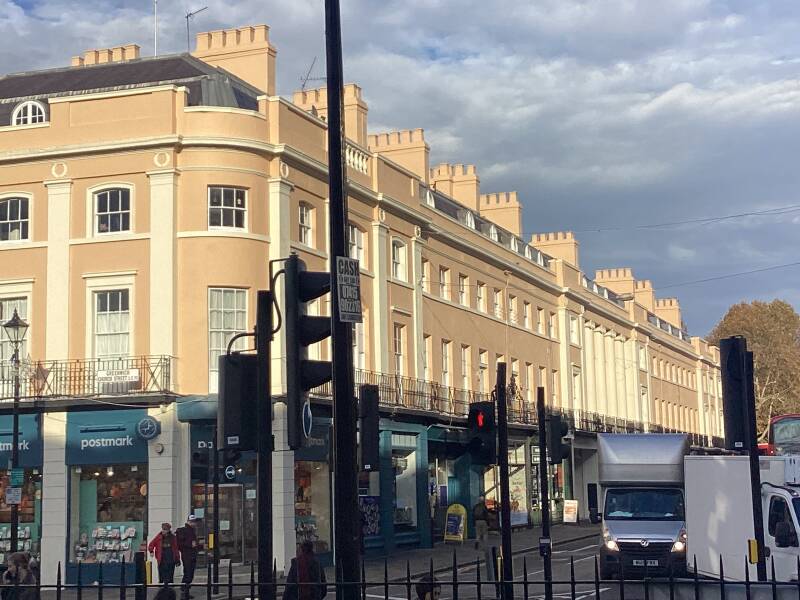
College Approach: The new town centre
This is part of Joseph Kay's improvement scheme for the Royal Hospital, landowners. It consists of a long stucco frontage from around 1830. The road was previously called Clarence Street – William VI had been Duke of Clarence. It is said to stand on the site of the Observant Friars building and had been known as Stocks Lane or Rood Lane.
GREENWICH MARKET. “A false balance…”
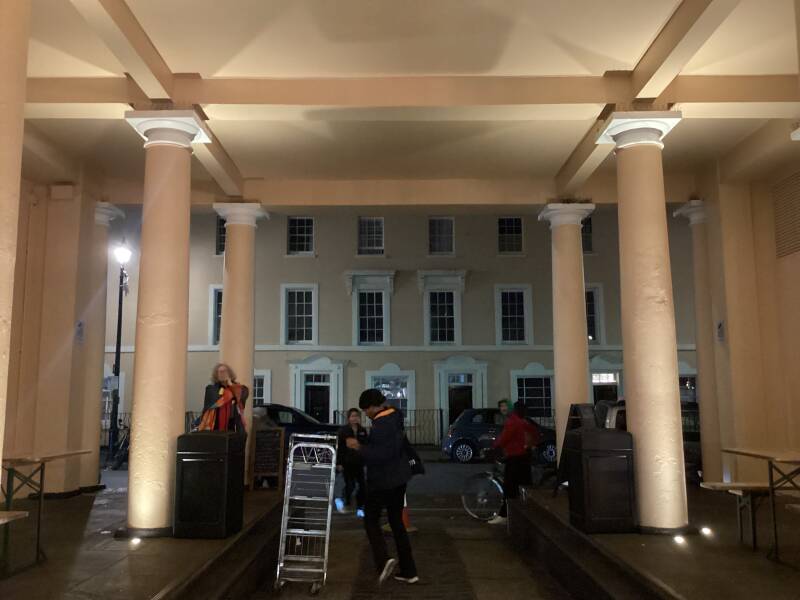
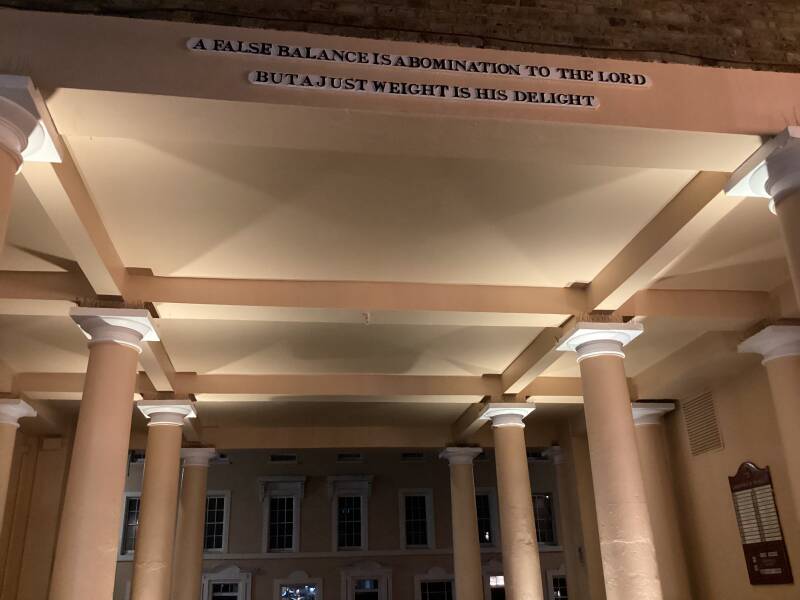
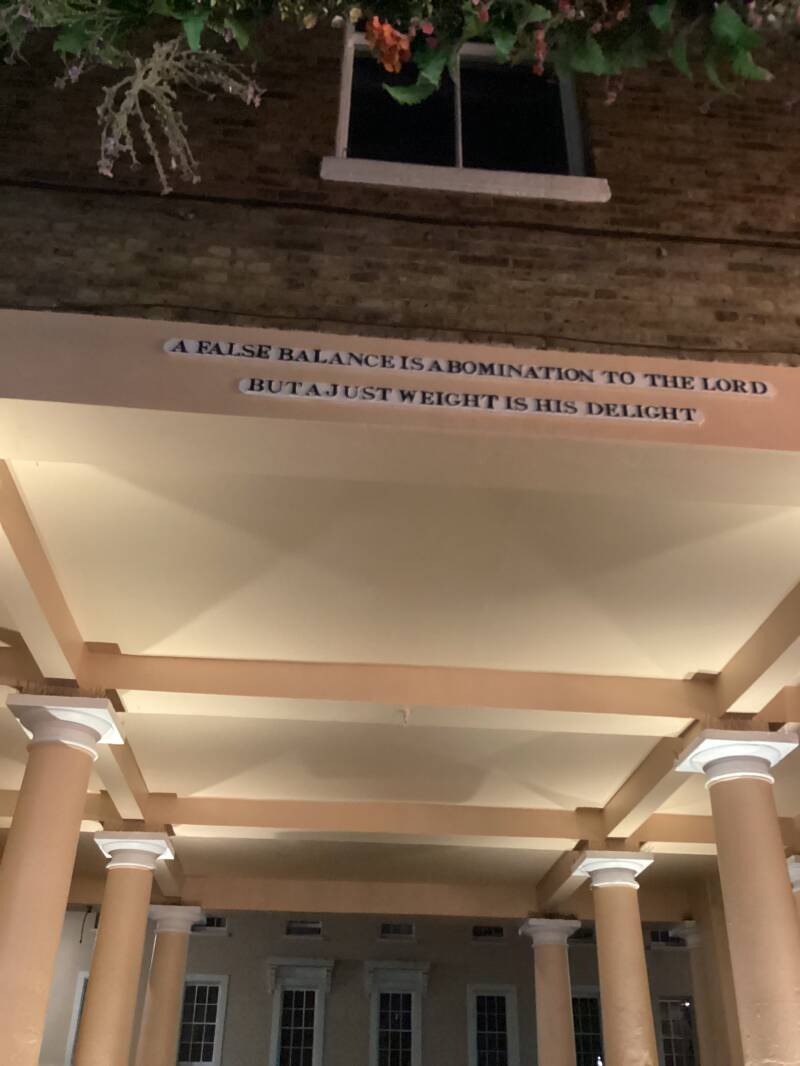
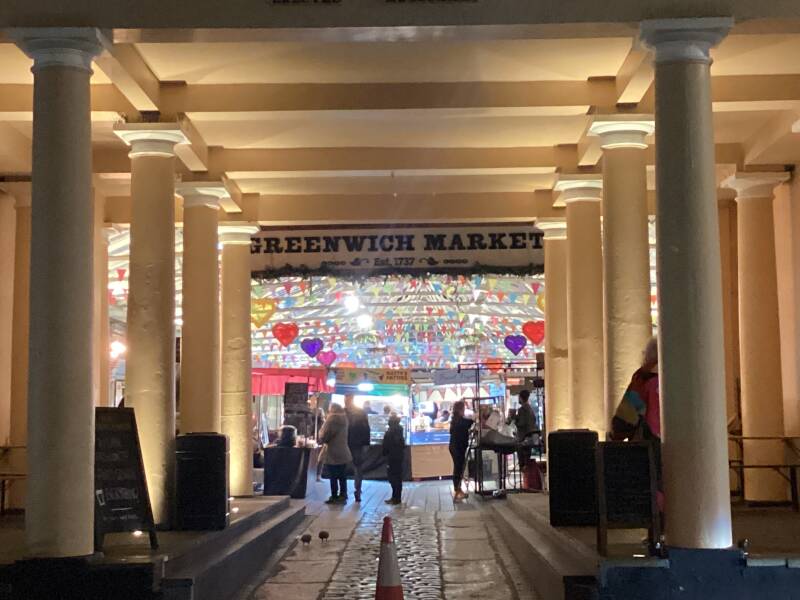

Built as part of the Kaye development of 1831. The centre rests on a wide, open carriageway. On 1st floor is an inscription "GREENWICH MARKET, ERECTED MDCCCXXXI." “A false balance is an abomination to the Lord but a just weight is his delight.
GODDARD’S
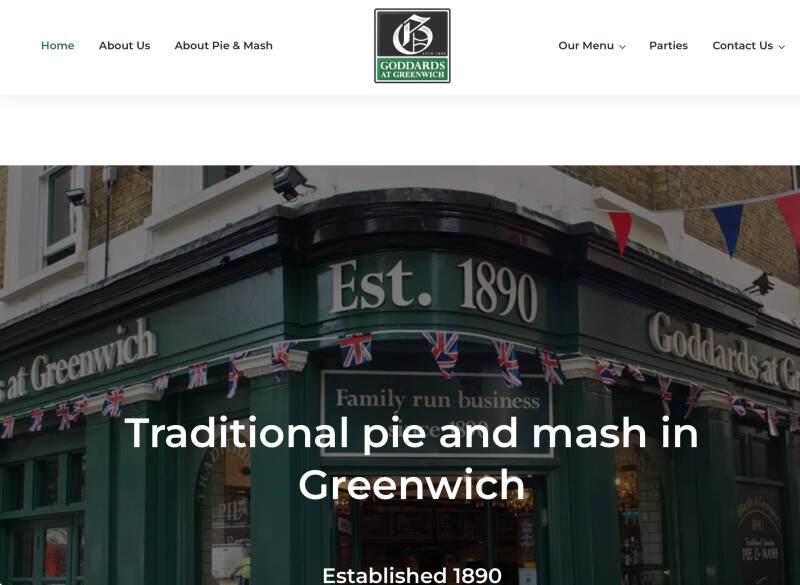
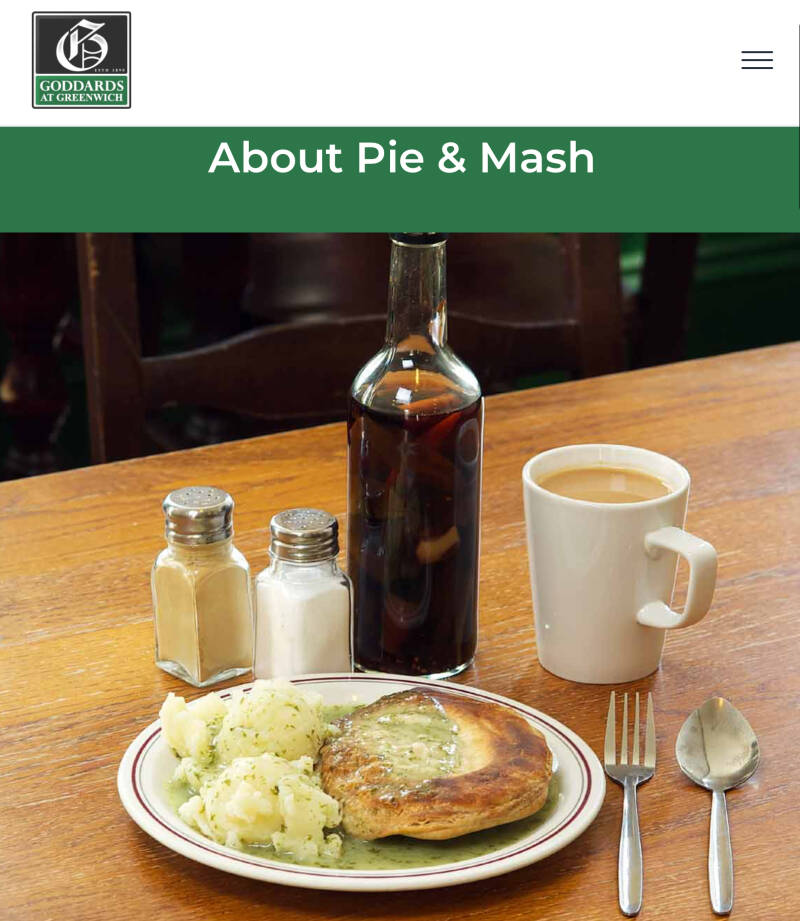
Pies have been the staple diet of Londoners for centuries and the London ‘pie and mash’ shops offer a meal that is steeped in history and ingrained in the very fabric of London.
“Eel Pie Houses”, as they were originally known, have been around since the 1700’s. Originally, the piemen would carry their pies in trays or small portable ovens to sell them on the streets of London. Early pies were actually filled with eels from the Thames, the eels would have been spiced and stewed in stock prior to being used as a pie filling. The more successful piemen were able to establish static stalls to increase custom.
In latter years eels became too expensive and the pies were then filled with meat. In modern times the pies are now filled with 100% minced beef.
THE ADMIRAL HARDY P.H.

Nelson spent time with his longstanding close friend and colleague Captain Thomas Hardy in the hours between his fatal shooting and eventual death. His last words to him are said to have been "Kiss me Hardy". Hardy responded by kissing Nelson on his hands and forehead.
It was open by at least 1837 (according to a lease dated that year, held in the National Archives), and was formerly part of the Charrington pub estate, though before that it was in the estate managed by the Notting Hill Brewery Co.
Nelson Road

Church St.
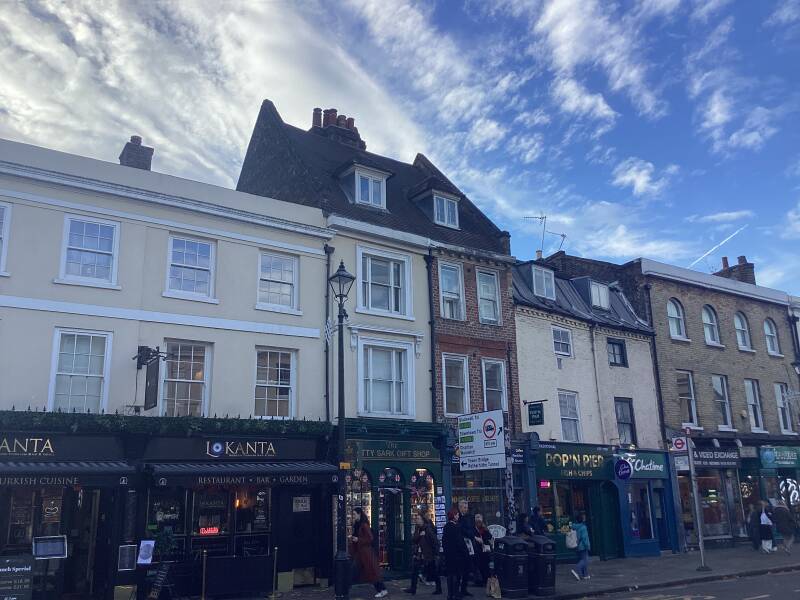
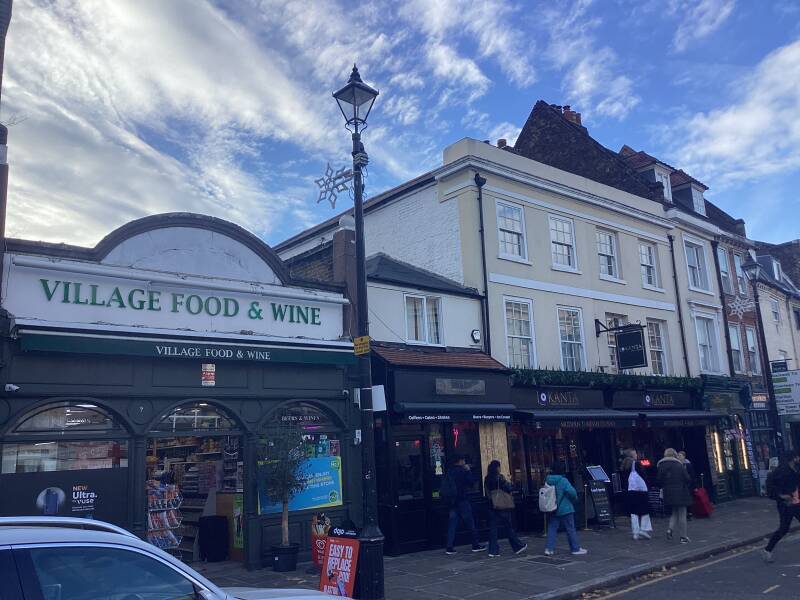
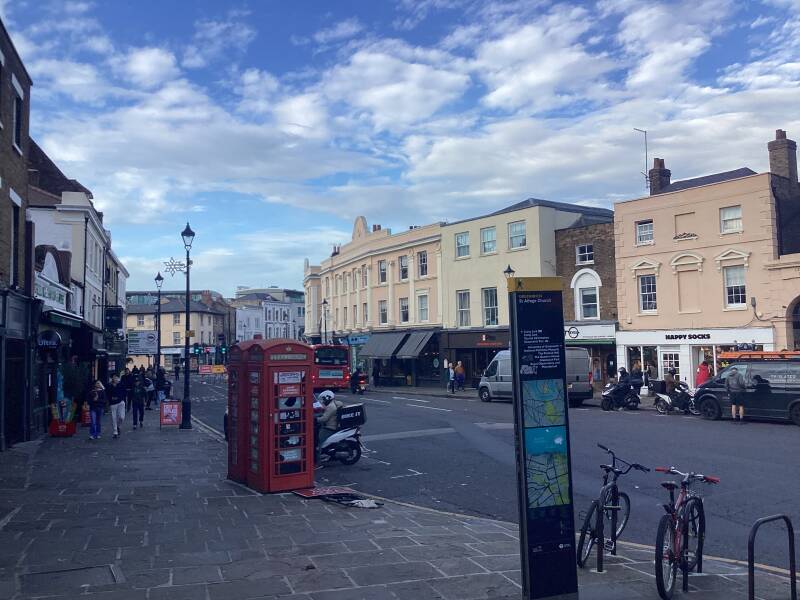
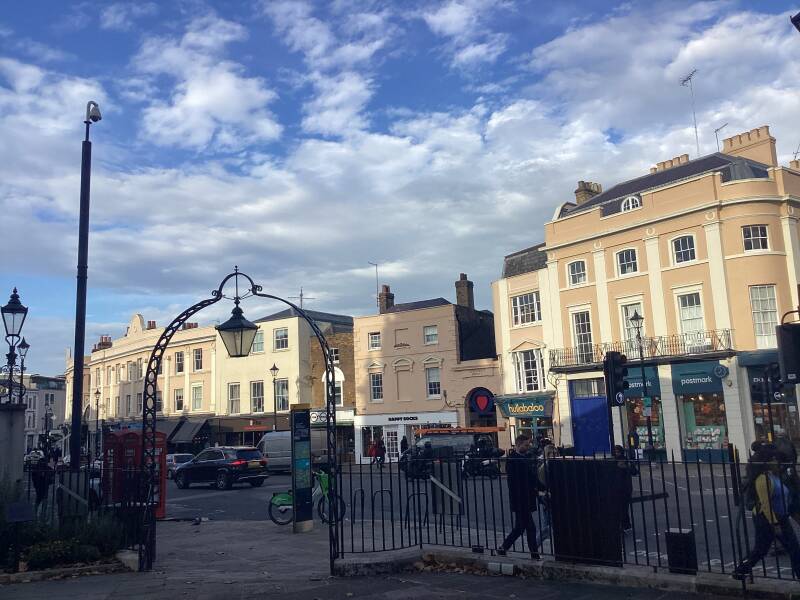
This was the main street of medieval Greenwich. From the Church it forks to the east leading to the river and to Garden Stairs. Many buildings are 17th and 18th with modern shop fronts.
Buildings on the east side are mainly from the ‘improvement scheme’ of the 1830s by Joseph Kay for the Royal Hospital.
Oldest houses?
No.3 (Corner of St.Alfege Passage and Greenwich Church Street). Early C18. From about 1795 to 1920 this building was the Eight Bells Public House.

Nos.11-21. The oldest buildings in Greenwich Church Street. Very early C18 but nos. 11 and 13 possibly second half of the 17th century.

Did DR.JOHNSON lived here?
Former BURTON’s
Clothing manufacturer and retailer. Montague Burton (1885 - 1952) was raised as Meshe David Osinsky,and emigrated from what is now Lithuania to England in 1900. He set up a business making and selling affordable clothes in the northern industrial towns. By 1914 he had 14 branches and by 1939 595, all in the UK. His company 'Montague Burton, The Tailor of Taste, Ltd' was the biggest bespoke tailoring business in the world, ever.
He provided, for the time, unusually good working conditions for his workforce but ruled the company in an autocratic style. Teetotal Montague like to have billiard halls above his shops and some are still there. Knighted in 1931.
Burton is now a British online clothing retailer, operated by Debenhams Groupin the United Kingdom.
DEMOB SUITS”: https://en.wikipedia.org/wiki/Demob_suit
St.ALFEGE’s Church
St.Alfege the martyr
The Tudor and their musician, Thomas Tallis
Bells, cylinders, cherubs
General Wolfe, the victor of Quebec
Nicholas Hawksmoor, the architect
James Thornhill, the great painter
More about heritage: https://www.st-alfege.org.uk/Groups/298239/Heritage.aspx
St.Alfege Passage
What had for centuries been Church Passage changed its name to St Alfege Passage in 1938. Shortly afterwards, the grandly named Parochial Church Council Of The Ecclesiastical Parish Of St. Alfege, Greenwich was given a bequest and in 1947 bought the row of houses, and still owns them today, renting them out to generate revenue for the church.
The passage wasn’t the genteel residential route it is today though, with warehouses mixed in amongst a row of fine Georgian terraced houses. A former church hall has a very 1970s look to it. At the far end is the locally famous B&B at number 16, which is owned by the retired actor, Robert Gray, though he has been moving his permanent residence to Cornwall.
The NS became the forerunner of the Roan School for Girls.
St. Alfege’s Parochial Hall (originally The National School of Education and Industry for Girls, 1814)
Diversion to Greenwich DLR station
Roan St.
46 Grey Coat House
The building was formerly the Roan School of 1808. There is a plaque over the door "Erected AD 1808 Grey Coat School. Founded 1677 MR JOHN ROAN By his will dated 16th March 1643 Devised certain estates the rents whereof were directed to be applied to the education and clothing of poor towns born children of the parish of Greenwich. This tablet was set in 1835." The tablet also includes names of Vicar and churchwardens.
The school was founded by John Roan (1600-1644). In 1640, Roan was appointed Yeoman of His Majesty's Harriers. During the Civil War he was arrested and as a prisoner of war.
The first school building was surrendered to Greenwich Hospital in 1808 and a new school, paid for by the Hospital, was built here.
The Roan Schools Foundation, who continue to manage the Roan Estate.
Cottage style housing (Edwardian workers' cottages)
FORMER, The GREYCOAT BOY P.H.
Straightmouth (street)
There has been considerable speculation about this road – if it is Roman, if it is an old main road, and what the name of the road derives from.

To the N
Church St
Behind no. 57, Site of ABOUKIR COTTAGES
Corner of Creek Road and Church St.
This block rebuilt as a result of the Docklands Light Railway. One building on this site had been called Prescott Place from 1898, and the other ‘Stanton’s Charity from 1896. They were on the site of the Unicorn Pub donated by William Stanton to the poor of Greenwich in 1610.
Former site of GODDARD’S
In 1952, another shop was opened in Greenwich at the same time as the Cutty Sark was placed in dry dock. For a time, pies were cooked at AJ Goddards in Deptford and transported by van to Greenwich. After a couple of years the two brothers decided to take one shop each and Bob Goddard (our grandfather) took the Greenwich shop while his brother remained in Deptford.
Creek Road
THE GATE CLOCK, JD Werherspoon P.H.
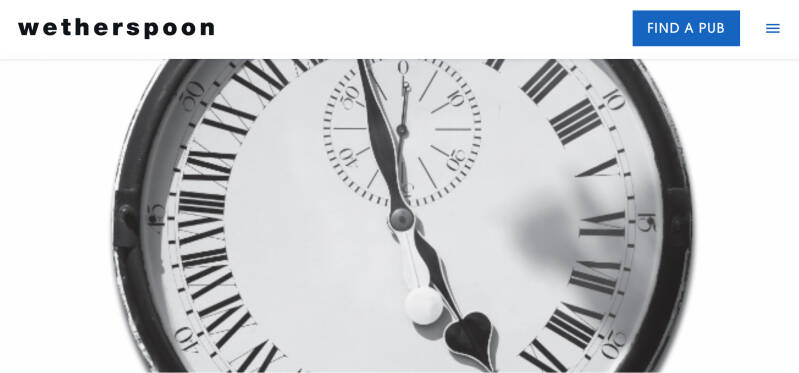
This Wetherspoon pub takes its name from the ‘galvano -magnetic’ clock fixed to the gate of the Greenwich Observatory in 1851. One of the first electric public clocks, it shows Greenwich Mean Time, still used as a measure for longitudes and global time zones.
The map of the area drawn a few years earlier, in 1869, shows that there was a brewery behind the site of these premises. The malt kilns were a long-standing local landmark. For many years, part of the site was occupied by a beer retailer.
UP THE CREEK, Comedy Club

Up the Creek was founded in 1991 in an old church hall by Malcolm Hardee, the legendary comedian and comedy club owner who Stewart Lee once described as a “national institution”. Malcom was a regular master of ceremonies at Up the Creek, and over the years the venue has welcomed top comedy talent, including the likes of Jimmy Carr, Dara O’Briain and Jo Brand.
New housing
Bardsley Lane
This lane, not a pretty sight until very recently,, was once lined on the north side by small houses and cottages. It is named after the Rev. Martin Bardsley, Vicar of St.Alfege’s Church at the beginning of the 20th century.
New housing
No. 22 built c.1900 as the Office of Weights and Measures. Built for the London County Council.
No. 2O. Built c.1902. Coroners Court. (Now Fuller Hills)
[Fuller Hills Ltd was a joinery works]
Back of No. 20. 1904. Mortuary. Architect Alfred Roberts of Greenwich (also Fuller Hills).
ST.ALFEGE PARK
In fact, it’s two graveyards, the ancient, and an expansion added in 1803 due to the tendency for people do keep dying, but in 1853 even that was full and they couldn’t keep buying more land. It’s thought that some 45,000 people were buried in the graveyard by the time it closed.
In 1889, the land was handed to the local council to look after and they opened it as a recreational ground. A number of new trees were planted and the area landscaped into gardens.
A lot of the gravestones were moved to the edges of the park, and in the 1950s the western end gained a hard-surfaced playground.

To the S
Stockwell St
UNIVERSITY of GREENWICH Campus
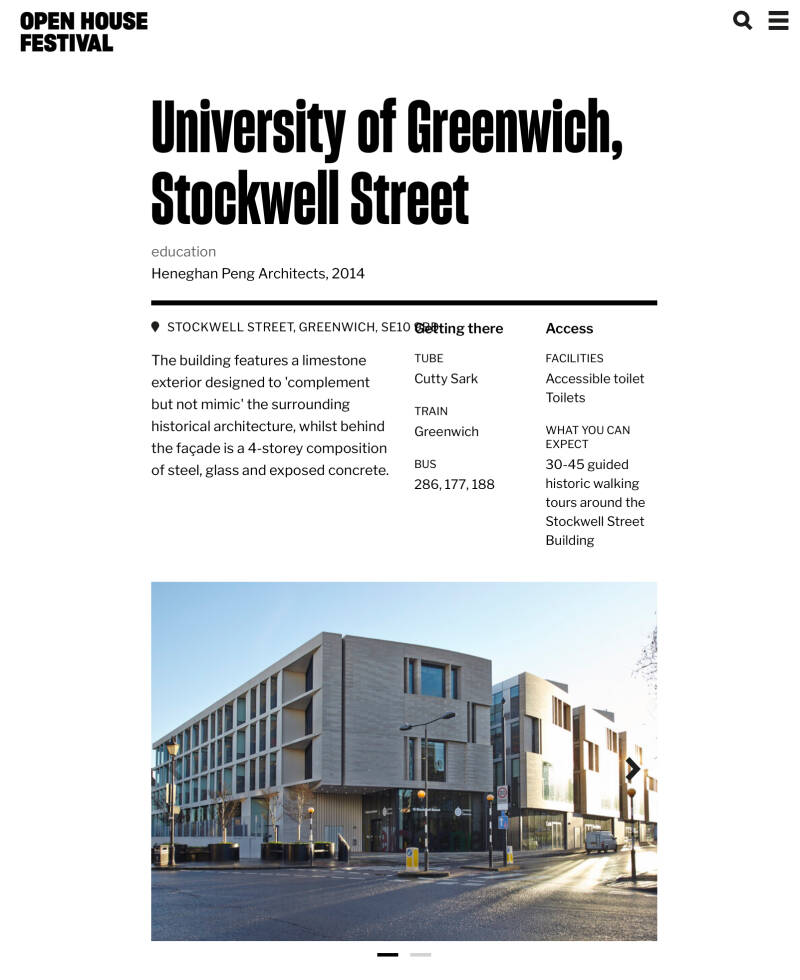
GREENWICH THEATRE
The FAN MUSEUM
Croom’s Hill
High Road
Railway tunnel
THE MITRE P.H. and hotel
Former TOWN HALL
PUBLIC LIBRARY
GREENWICH RAILWAY STATION
ALMSHOUSES

See route from Blackheath to Greenwich or Deptford for full information about the sights of this area

Still enjoying the guide?

Why not helping…